Which of these 1940s looks is yours depends on the occasion you’re dressing for: the satin gown and the strapless Rita Hayworth dress belong to evening, while the vintage overcoat is the only idea that works as real outerwear in daylight.
The 5 looks cover a lot of ground, from a floor-length satin gown to a wide-leg trouser suit with a necktie and a hat tipped over one eye, and the black midi dress lands in the middle as the one I’d reach for again and again, whether the night is a dinner, an office party or a wedding.
1. Satin Gowns
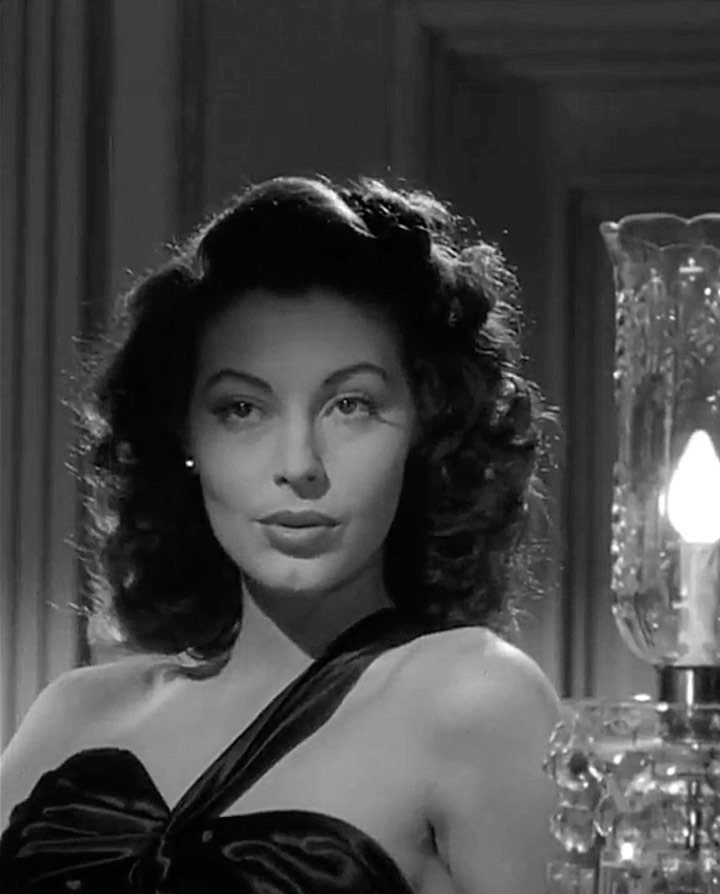
A dark satin gown does its work through the sheen. Satin catches light along every fold, so a plain black or deep-toned column with no beading or print gives you the shadowy, 1940s film-noir look without any extra effort.
Pick a cut that skims instead of clings.
Satin shows every seam and bump, so a lining or a smooth slip underneath matters more than the neckline. Keep jewelry minimal and let waved hair carry the rest.
This suits an evening event best. Satin gowns belong to evening; in daylight the sheen reads as overdressed, so I’d reach for a crepe dress or a tailored suit instead.
2. Rita Hayworth
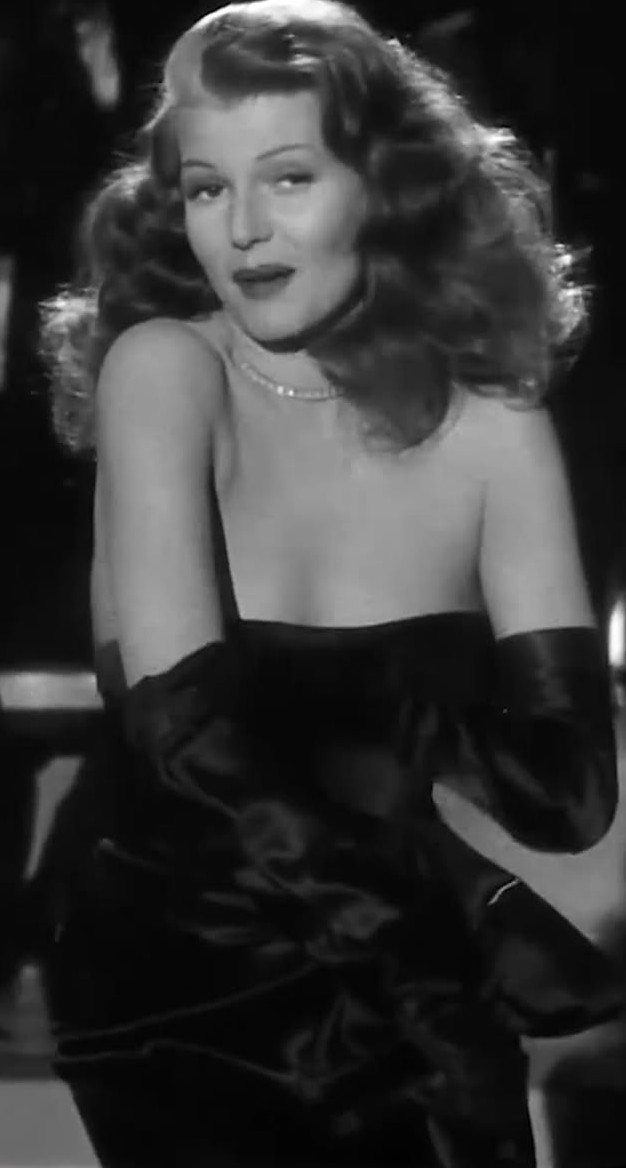
Pearls against a strapless black gown: that pairing is the Rita Hayworth look, and it is easy to borrow. One strand sitting at the collarbone is enough, and it softens the severity of the black.
Strapless works best with a structured bodice, so the neckline stays put without tugging. Pair it with soft waves brushed out over one shoulder, and keep the makeup to a defined lip and a clean brow.
Short on a gown? A strapless black dress you already own, with real or good faux pearls, gets you most of the way there.
3. Vintage Overcoat and Leather Gloves
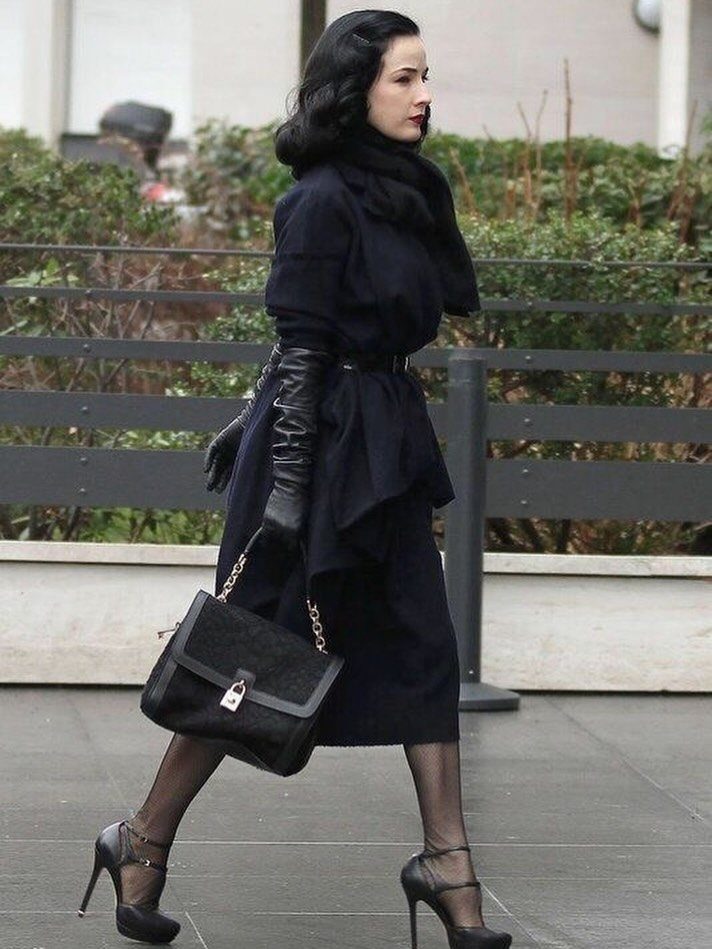
Wear the coat closed and let the gloves finish the line. A dark, tailored overcoat that hits below the knee reads as 1940s because of its structure, so look for defined shoulders and a belted or nipped waist.
Long leather gloves should meet the coat sleeve with no bare wrist showing. Sheer stockings and high heels complete the column of dark color.
This is the one idea here that works as real outerwear, and a coat you already own may be the best starting point. Try on the gloves with that coat before buying, since sleeve length decides the fit.
4. Little Black Midi Dress
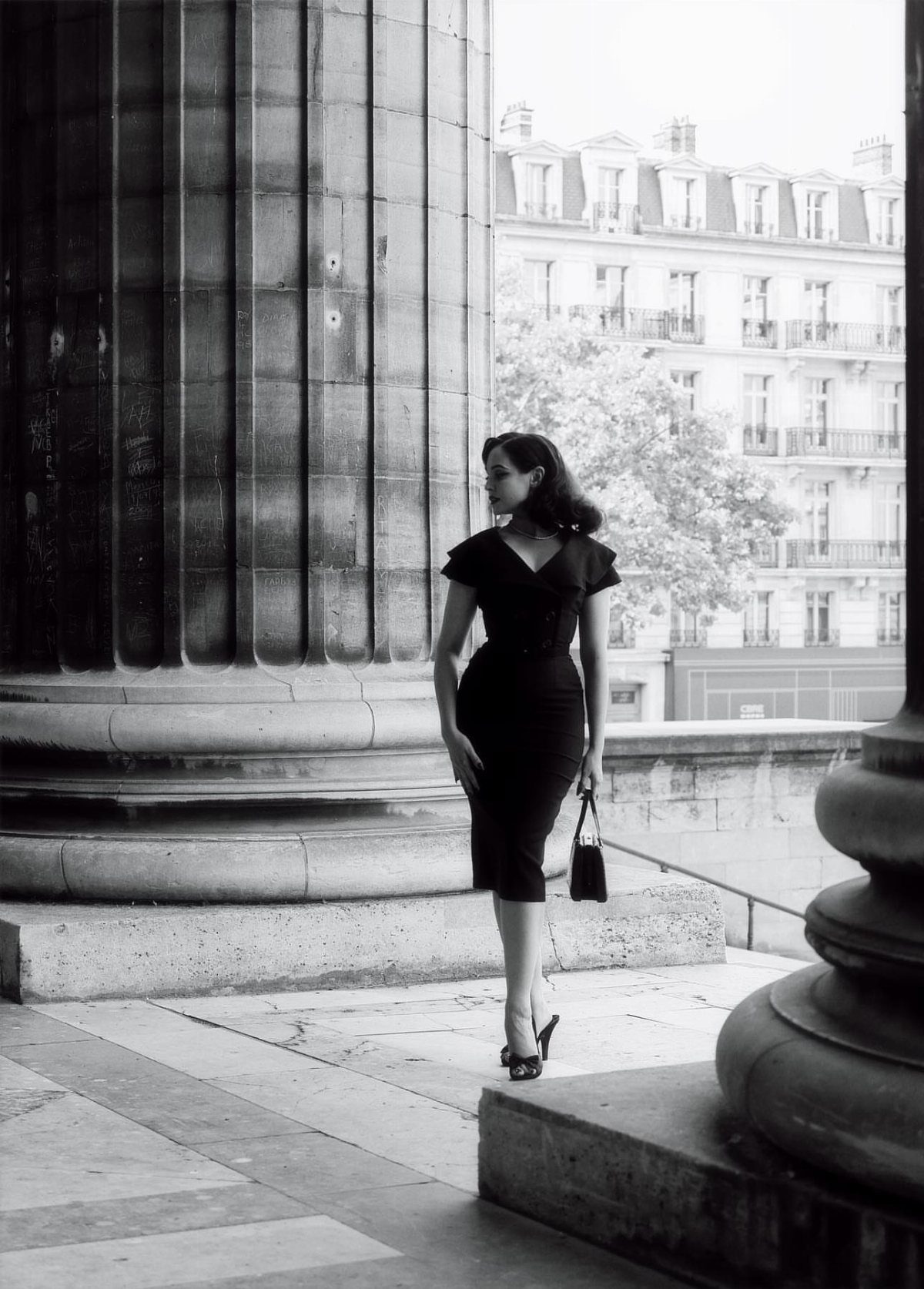
A fitted black dress that stops mid-calf is the easiest piece here to wear again, since a belt, a different heel or a swapped jacket changes it completely.
Choose a cut that follows your waist, and the heel and structured handbag do the period styling for you.
Classic pumps keep the line clean, and a handbag with a firm shape, not a slouchy one, matches the dress’s tailoring.
Hem length is the detail I check first: midi should land at the widest part of the calf only if that flatters you, so try it with your heels on.
It works for dinners, office events and weddings alike.
5. Wide-Leg Trouser Suit
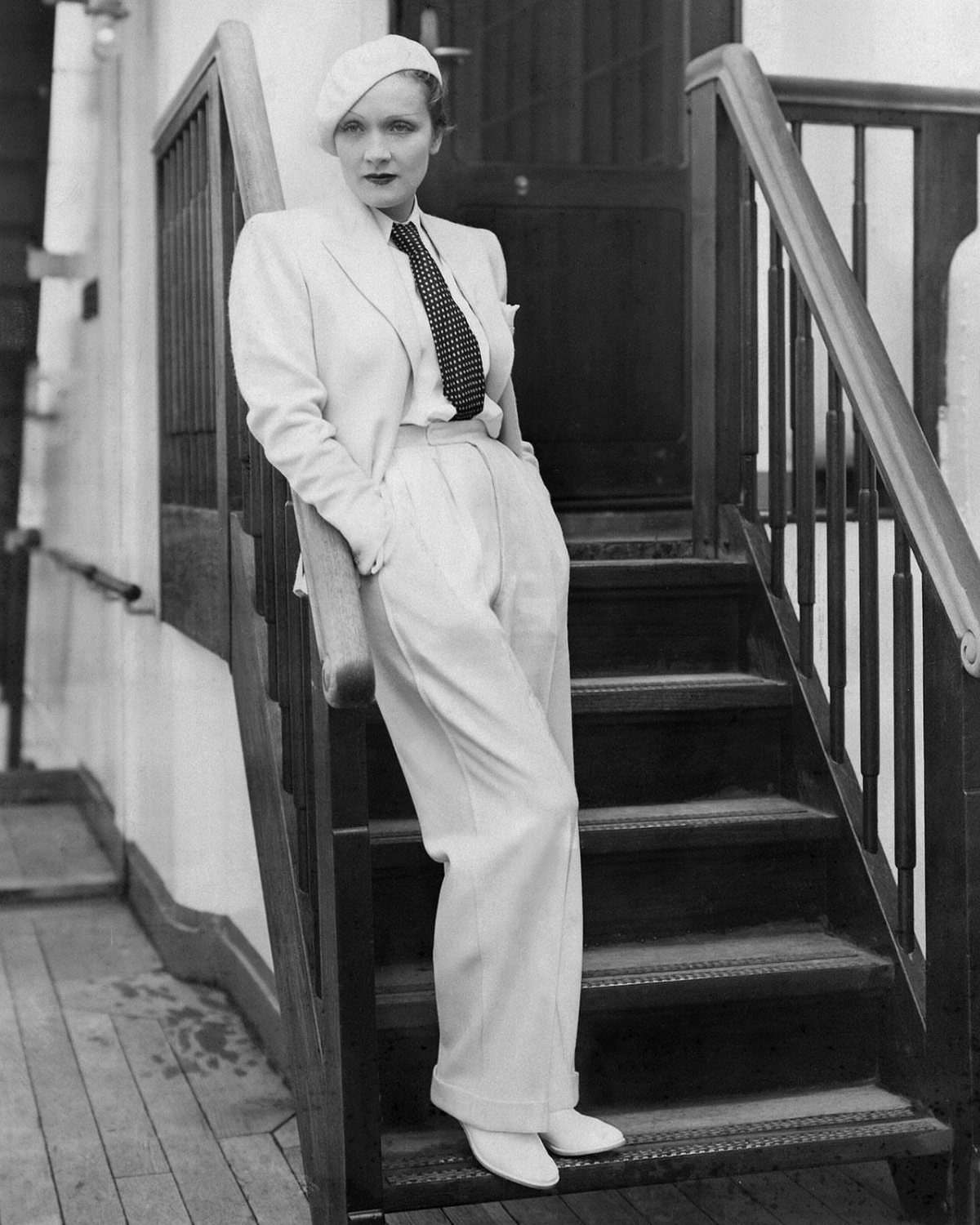
Trousers with width, a tailored jacket and a necktie make the most masculine-leaning femme fatale look, and I like it best for that reason. A matching set in a light color keeps the outfit from feeling heavy.
Wide legs need a high waist and a hem that reaches the shoe, so wear your heels when you check the length. A structured tilt hat, angled over one eye, adds the final line.
If a full set is too much, the necktie alone with a blazer you already own gives a taste of it.
Femme Fatale Wardrobe Tips
A femme fatale is defined by beauty, mystery, seduction and danger, so the wardrobe should feel controlled rather than loud.
Choose one dramatic element per outfit, such as a satin piece, a sharply structured dress or a single bold accessory, and keep everything else quiet.
Structure matters more than volume. A dress with a defined shoulder and a clear waist reads as deliberate, while extra layers of accessories start to look like costume.
Bold accessories work best when they have a clear job. A dark lip, a statement clutch or a pair of gloves can each carry the look alone, and stacking all 3 usually weakens it.
Keep the palette tight, and let one shine, usually satin, supply the glamour. The mystery comes from restraint: leave something unexplained.
Historical Context
Film noir gave us the femme fatale in the early 1940s, just as WWII settled over the screen with a mood of doubt, cynicism and nihilism that shaped nearly every story.
That history is useful when you dress the part.
She was not simply a villain: she could question her motives and even regret what she had done. So I’d aim for an outfit with a little ambiguity, polished and confident but not cold.
Her staying power is also the reason the look still works now. Pick the mood, not a costume, and borrow only what suits your body and the occasion.
Aside from being the number one pin-up girl for GIs in World War II, Rita’s screen heyday in the 1940s was filled with noir classics like Gilda (1946) and The Lady from Shanghai (1947), which forever cemented her as the ultimate femme fatale.
Frequently Asked Questions
Who is the most iconic femme fatale?
Rita Hayworth and Barbara Stanwyck are two of the most iconic, and Hayworth’s look is the easier one to borrow.
How to look like a 1940s woman?
Start with structure: defined shoulders and a clear waist read as 1940s more than any single accessory.
A tailored dark overcoat that falls below the knee, a fitted black midi dress with classic pumps, or a satin gown for evening all work.
Add waved hair and sheer stockings, and keep the rest quiet so the outfit looks deliberate rather than like a costume.
What does a femme fatale wear?
She wears glamorous, controlled pieces: a dark satin gown, a sharply structured dress, a tailored coat with long leather gloves, or a wide-leg trouser suit with a necktie. Stacking several bold accessories usually weakens the look.
Who were some of the most famous women in the 1940s?
Rita Hayworth and Barbara Stanwyck are two of the best known, both famous for playing femme fatales in film noir.
Film noir took hold in the early 1940s, and its leading women were polished and confident, with a streak of ambiguity that kept the audience guessing.
Their styling is still easy to borrow today, as long as you pick the mood rather than a full costume.