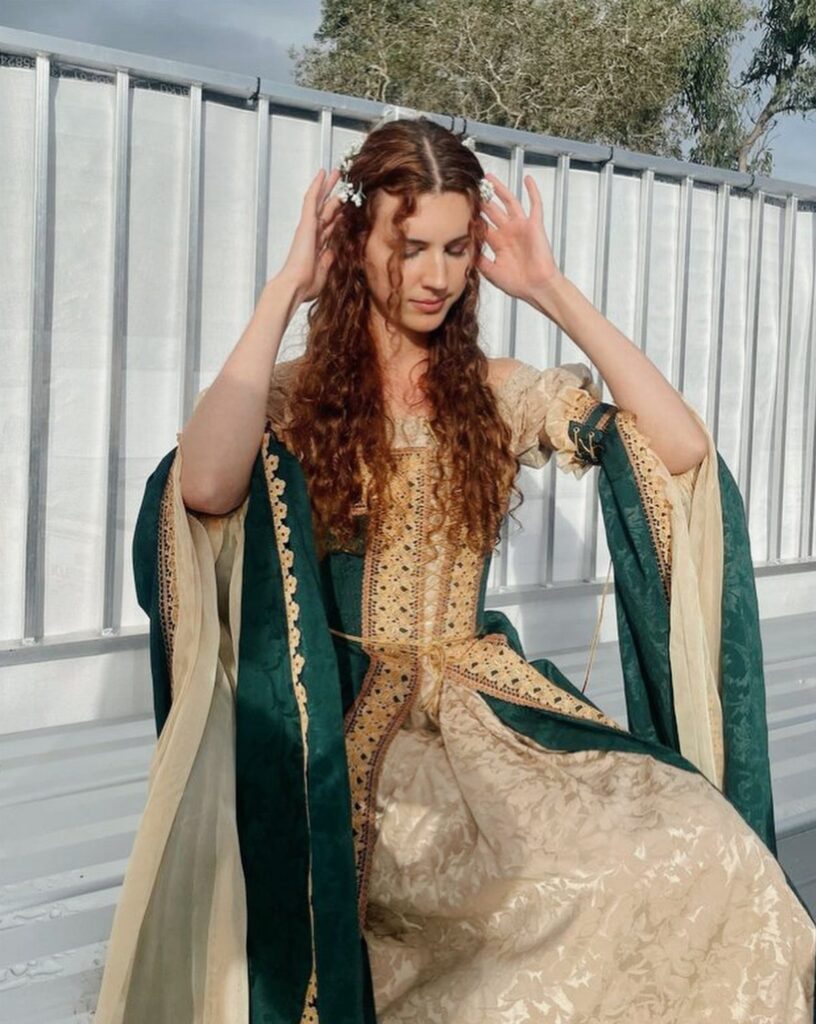
The list runs from a plain linen peasant dress to a gold-brocade noble gown with an ornate headdress, and the occasion decides which one is yours: a photo shoot or themed event can carry the attention-grabbing look, while a day of walking, a fair or a LARP session needs a dress you can move and reach in.
Fabric matters as much as cut, since linen wrinkles and still reads as authentic, while an all-white tiered gown asks you to plan your route around damp ground.
1. Medieval Dresses for Women
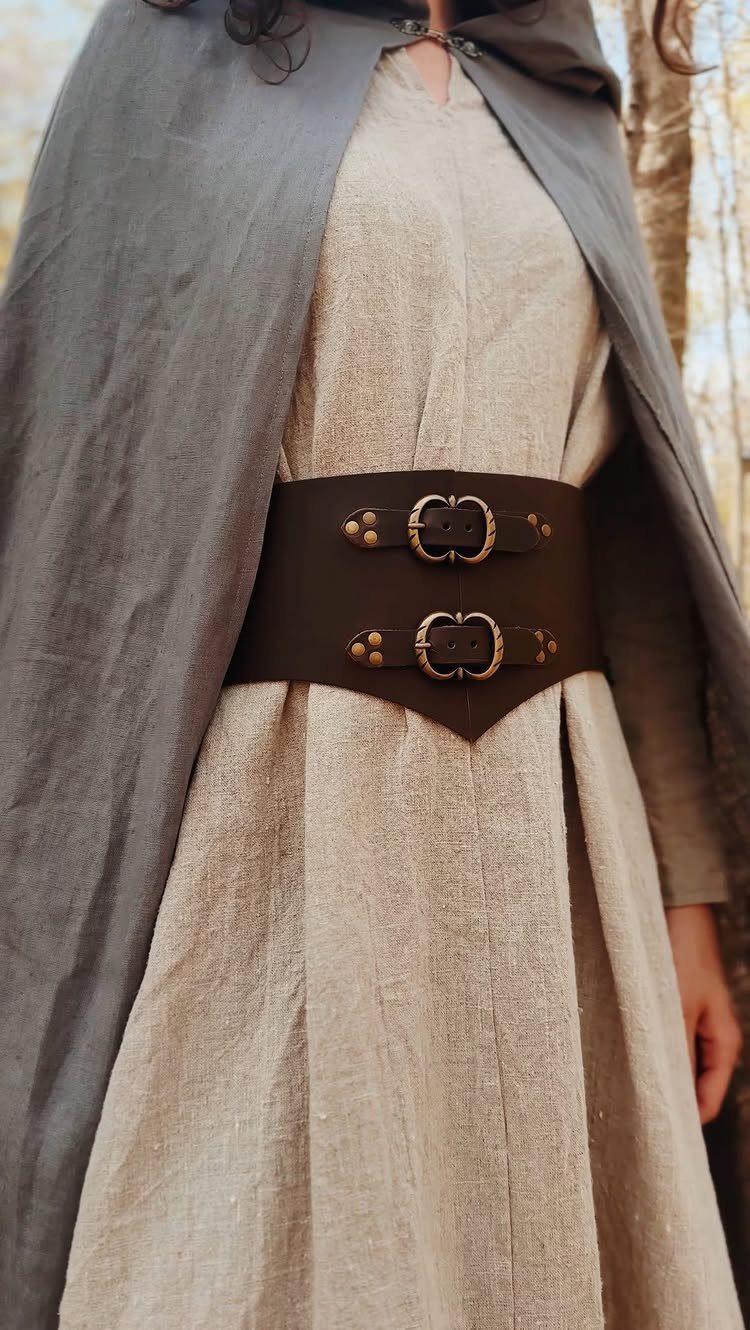
The belt cinches the waist and gives a straight dress shape, so it works on a pear, a rectangle or an hourglass figure.
A grey cloak adds a layer for cool outdoor events like fairs and woodland walks. Choose a belt with 2 buckles so you can adjust the fit as the day goes on.
Linen wrinkles, and that suits a medieval look. Keep the colors earthy and the outfit reads as authentic rather than costume-shop.
2. Noble and Peasant Dresses
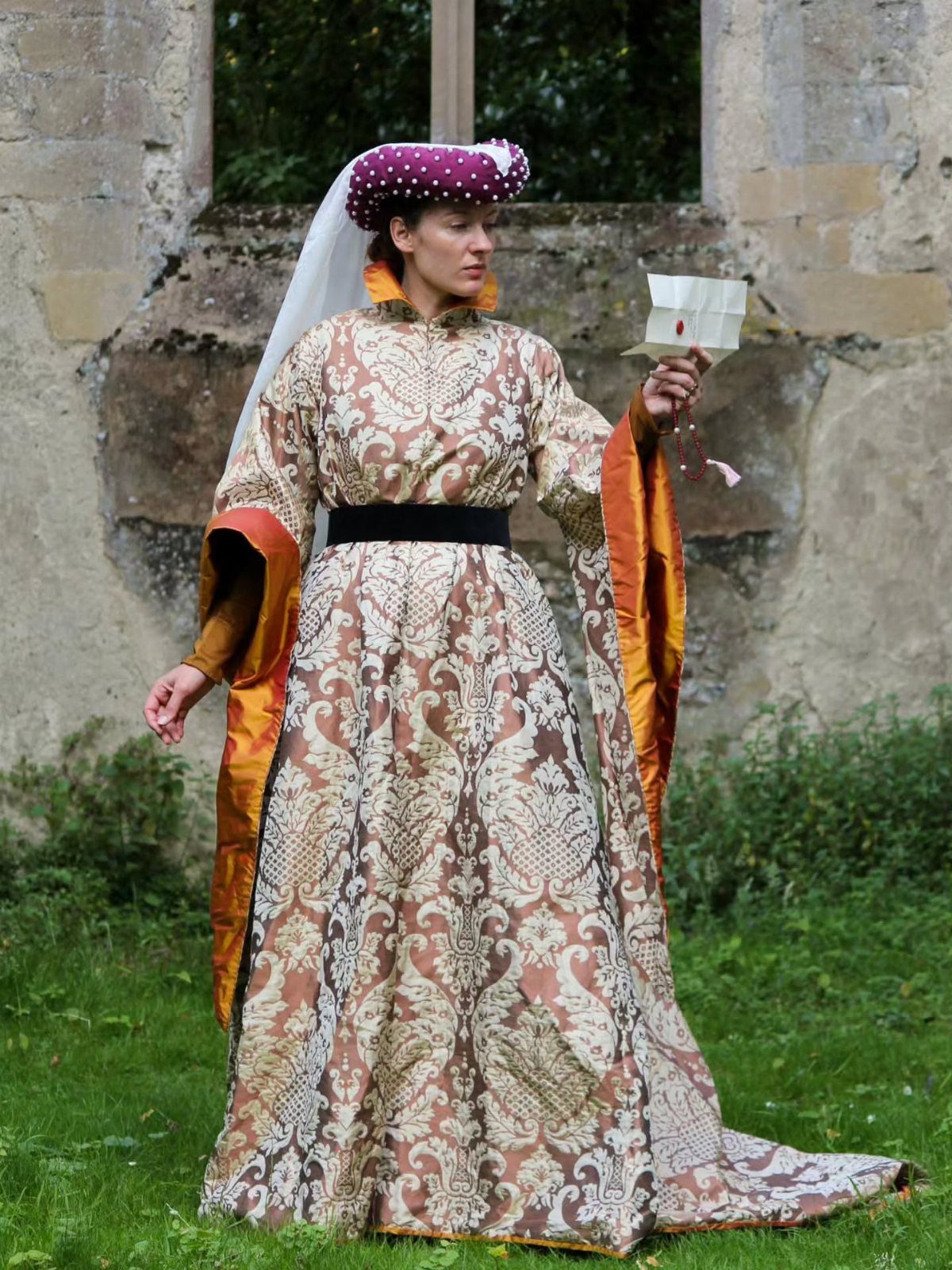
Status shows in the details: gold brocade or patterned fabric, jewel tones like purple, and an ornate headdress read as noble, while plain linen, wool and muted earth colors read as peasant.
Rich pattern and a structured headpiece do most of the work.
A peasant dress goes the other way: plain fabric, simple cut, no jewels.
Pick based on the occasion. The noble look draws attention, so it suits a photo shoot or a themed event, while the plain version is easier to wear for hours.
If you only want one, choose the noble gown and skip the extra accessories. The headdress already carries the outfit.
3. Floor-length Dresses
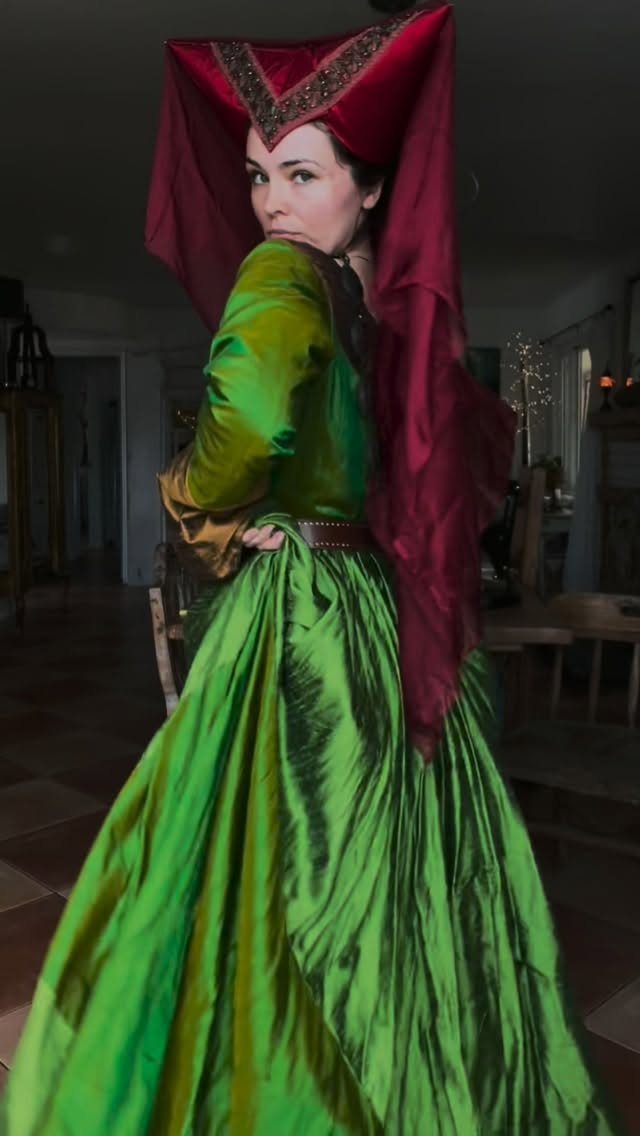
A floor-length green dress gives you the longest, cleanest line of any medieval cut, and it is the style I find most forgiving on a petite or tall frame alike.
Check that the hem clears your shoes with room to walk.
A dramatic headpiece on a floor-length medieval dress is a bold choice, so keep the dress itself plain and let the headpiece be the one dramatic piece.
Indoor events suit this look well, since long skirts catch on rough ground.
4. LARP Medieval Dresses
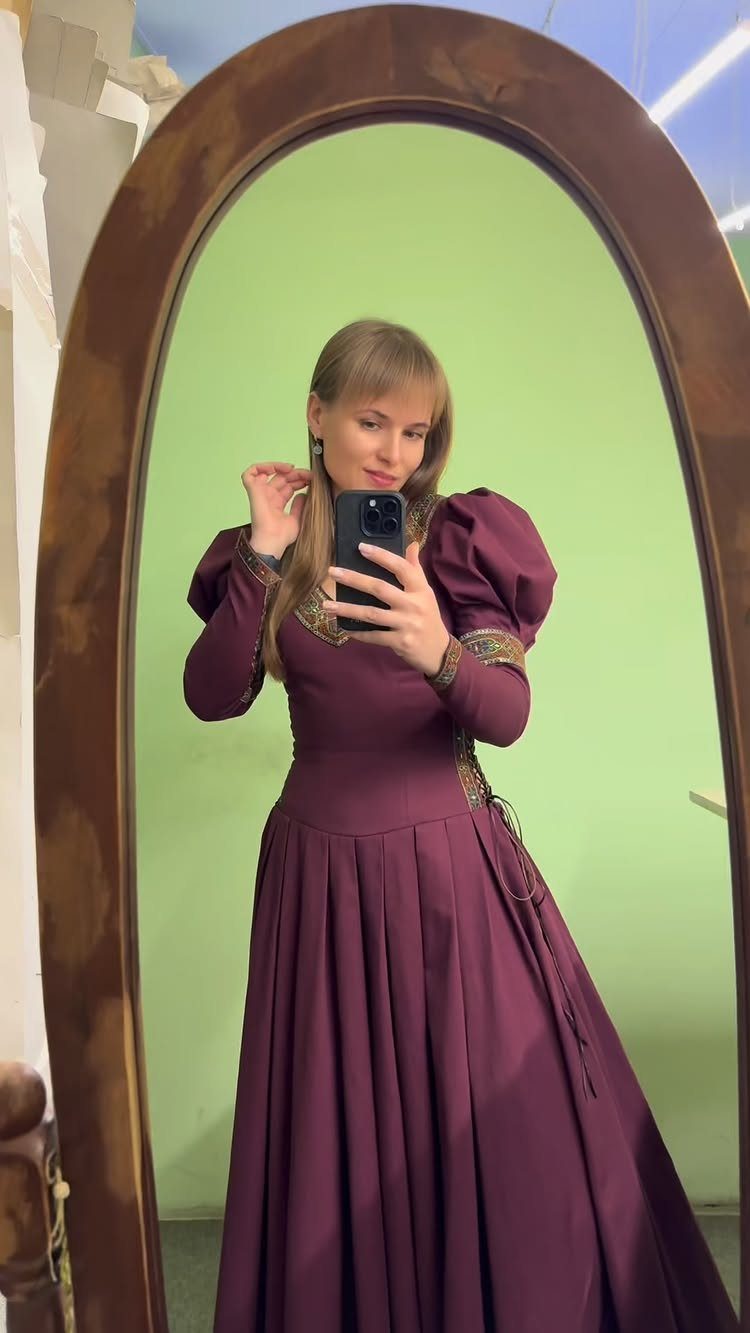
Purple with gold embroidery and puffed shoulders looks like a character, not just a dress, which is what a LARP outfit needs. Build the costume around who you are playing before you pick the color.
Long sleeves and a floor-length skirt cover a lot, so try the dress on and raise your arms. Puffed sleeves should let you reach and grip without pulling at the shoulders.
Take a mirror photo before the event. It shows you how the skirt hangs and whether the sleeves hold their shape.
5. Corset Blouse and Skirt Set
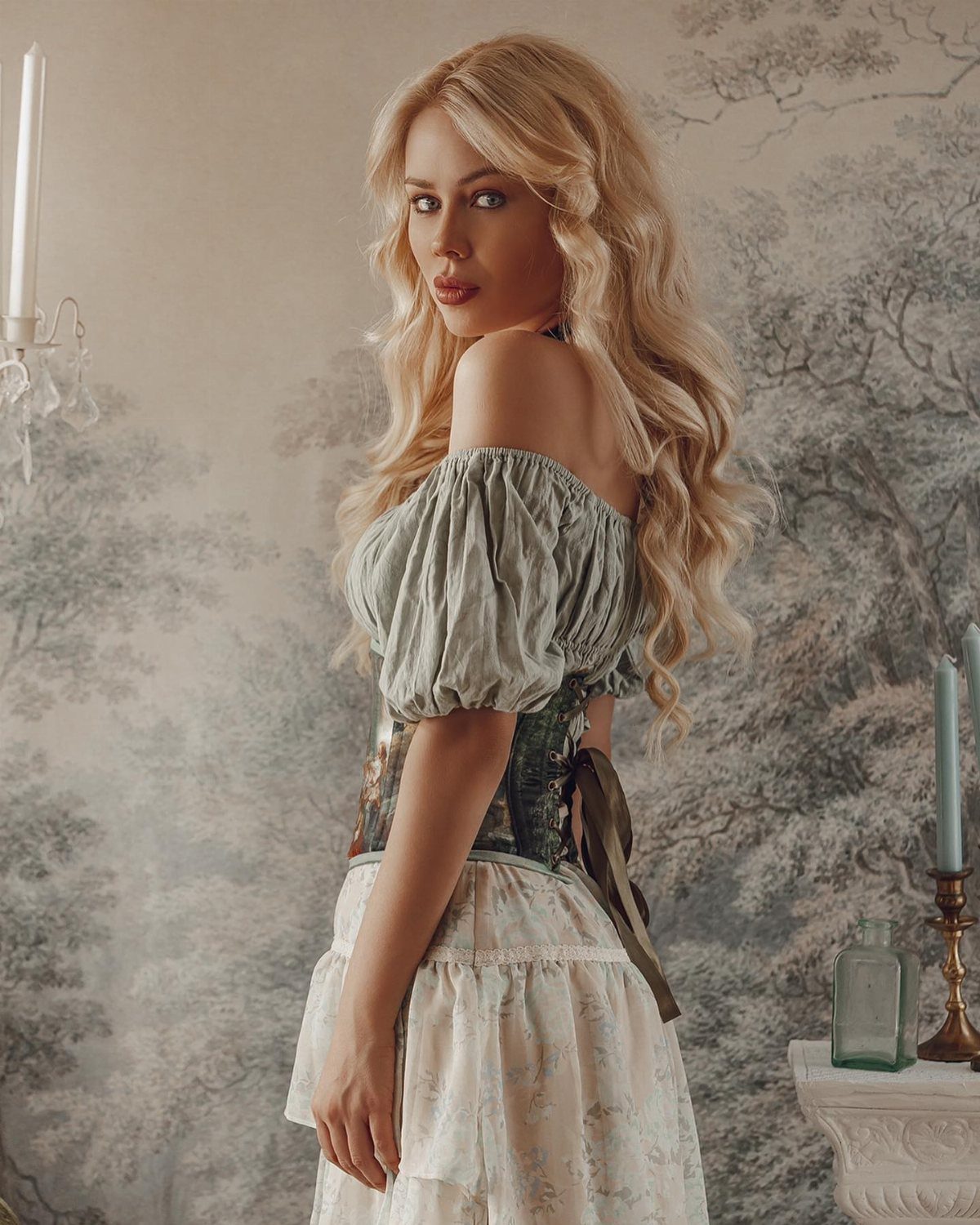
Separates make medieval style easier to wear again. An off-the-shoulder grey blouse, a green lace-up corset and a long white floral skirt can each be worn on their own later.
The corset defines the waist, and the lace-up back lets you adjust the fit, which helps on an hourglass or a straight shape. The off-the-shoulder neckline balances a fuller skirt.
I like this one for shoppers who want value: you can pair the blouse with jeans and the skirt with a plain tee.
6. Tiered White Medieval Gown
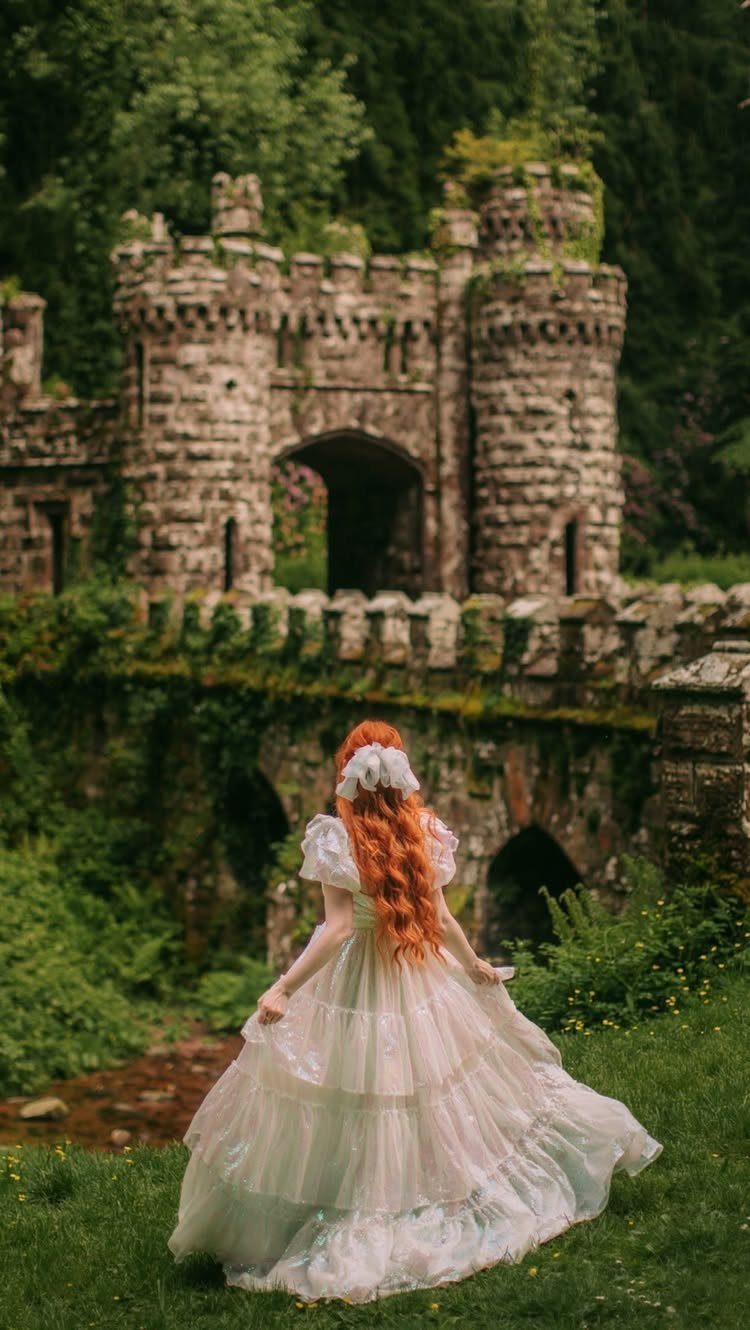
An all-white tiered gown looks best from behind, where the layers fall in rows down the back. That makes it a strong choice for outdoor photos at a castle ruin or in the woods.
White shows dirt on the hem, so keep it off damp ground and plan your walking route. Let the volume do the work: skip heavy jewelry and wear your hair down or loosely styled.
It is a dress for a special occasion rather than everyday wear.
Frequently Asked Questions
What should I wear to a medieval theme party?
For a medieval party, start with a floor-length dress that suits the person you’re playing, a peasant, a lady of the manor or a queen, and stay with muted shades like moss, rust and oatmeal so the outfit looks period rather than packaged.
A belted linen dress works well, and a floor-length cut gives the cleanest line.
Rumpled linen only helps the effect, and I’d toss a wool or heavy cotton cloak over it when the event is outdoors and the evening turns cold.
What was a typical medieval female outfit?
Most women wore a long linen chemise next to the skin, covered by a gown or a work apron, then added a belt, veil or small trinkets.
Later in the period, roughly the 12th through 15th centuries, dresses began to fit the body closely and fasten with lacing. Cut and color also signaled the wearer’s status.