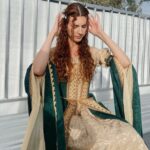
Shoulder width and how you feel about a narrow skirt decide which of these dresses is yours: broad shoulders do better away from the Puff Sleeve Floral Dress, while the Sheath Dress puts the waist in focus for anyone who can live with a shorter stride.
The list runs from a shirtwaist to a classic black velvet dress, and fabric shifts the formality as much as the cut does, so the section on popular fabrics is worth a read before you buy.
1. 1950s Shirtwaist Dress
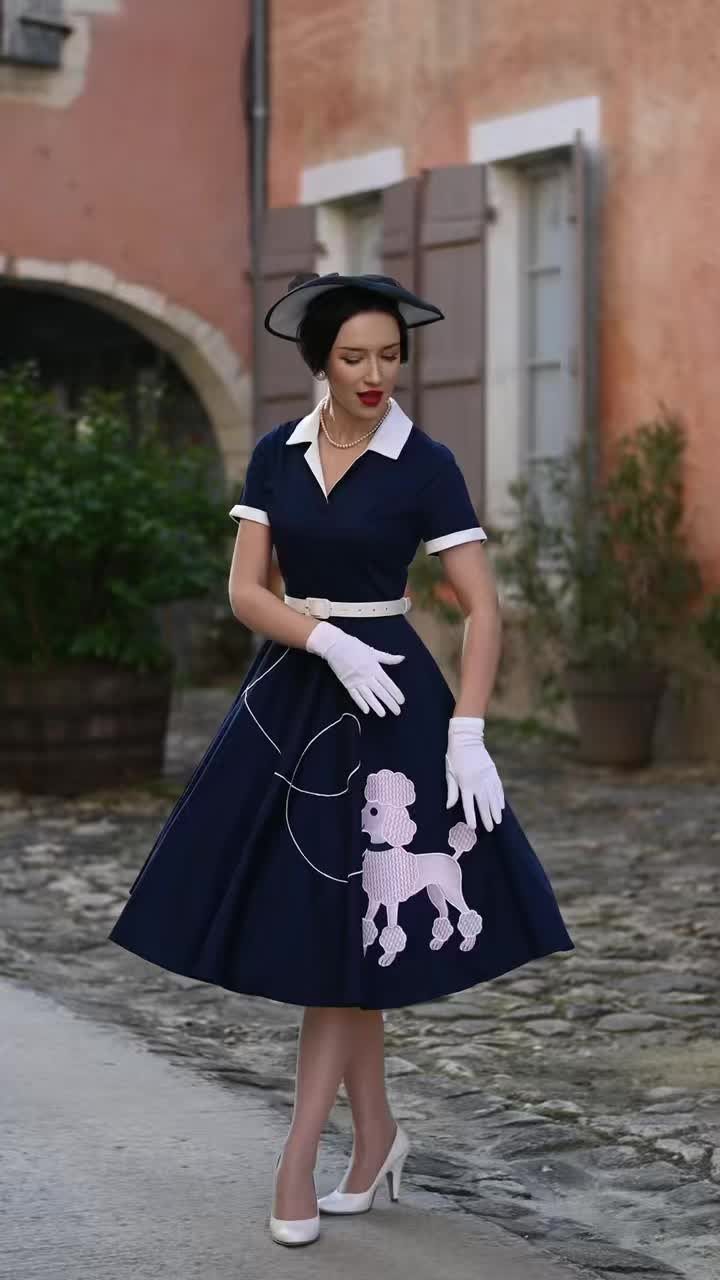
A shirtwaist is a button-front dress with a collar and a defined waist, and that is why it handles so many settings.
A belt, gloves and a hat push a navy shirtwaist from daytime neat to properly dressed up, and the belt does the most work by defining the waist. Drop the gloves and wear flats, and it works for a weekday.
For a party, I would pick a darker solid like navy and let a white collar and belt do the contrast. A contrast belt marks the waist clearly, which flatters most body shapes, especially if you carry less definition there.
Buttons running down the front also mean you can adjust the neckline to suit the room.
2. 1950s Swing Dress
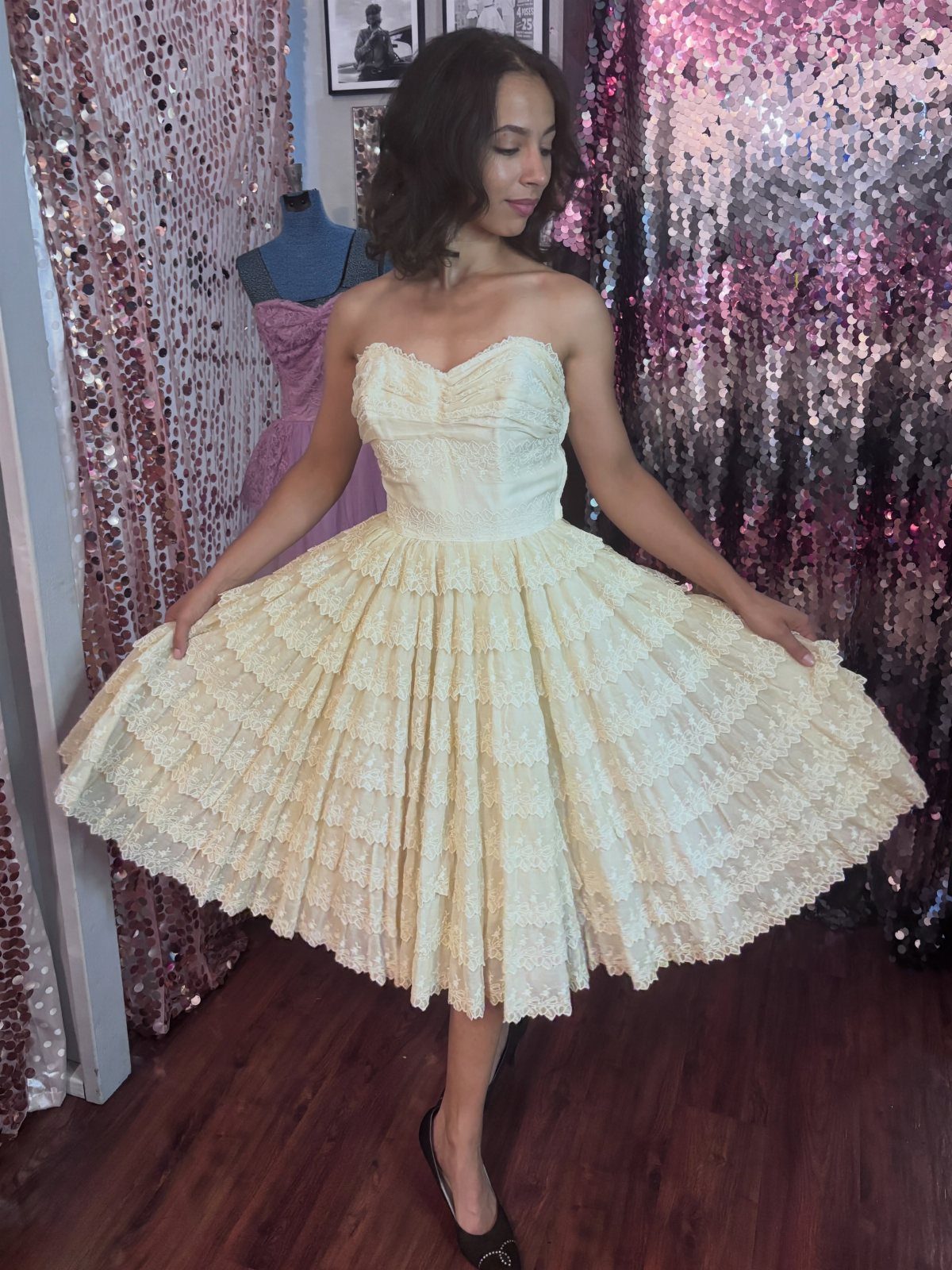
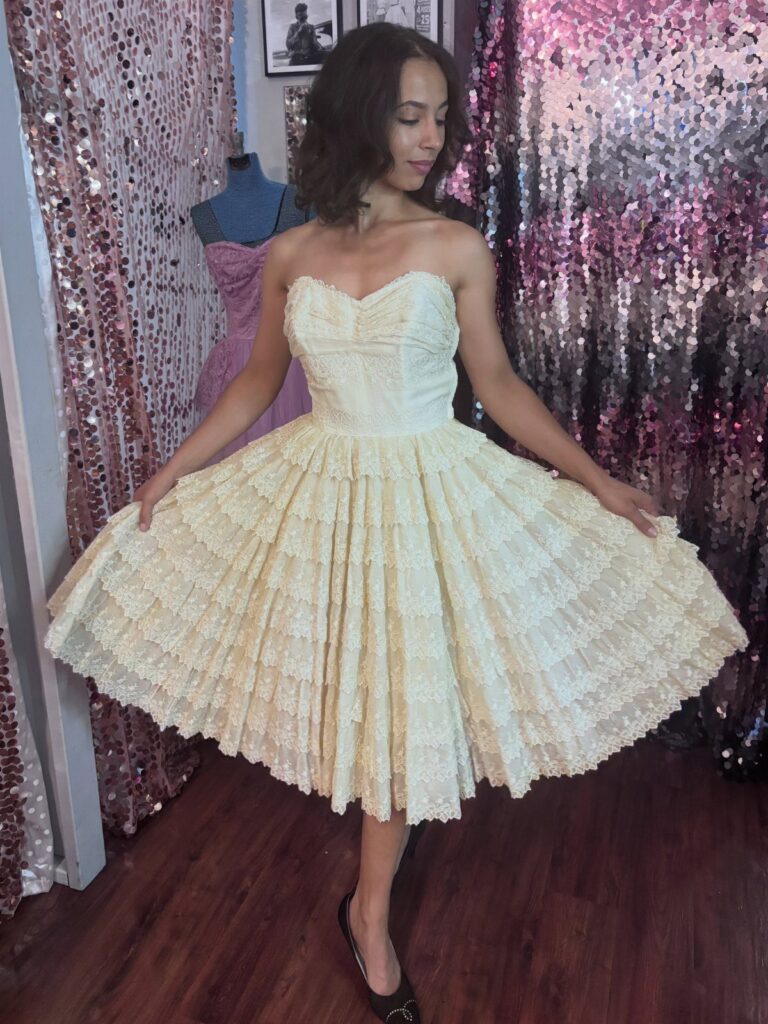
Volume is what a swing dress is for, and a tiered lace skirt pushes it further than a plain circle cut. The strapless cream bodice stays fitted, so the shape reads as a small waist over a wide hem.
This silhouette suits pear and hourglass figures best, since the skirt skims past the hips and the fitted top defines the waist. If you are broad through the shoulders, I would look for a version with straps instead.
Lace in cream is a lighter choice than black, so it suits an afternoon or spring party.
A strapless top needs a snug fit to stay put, so try it on and move around (reach, sit, lift your arms) before you commit.
3. 1950s Sheath Dress
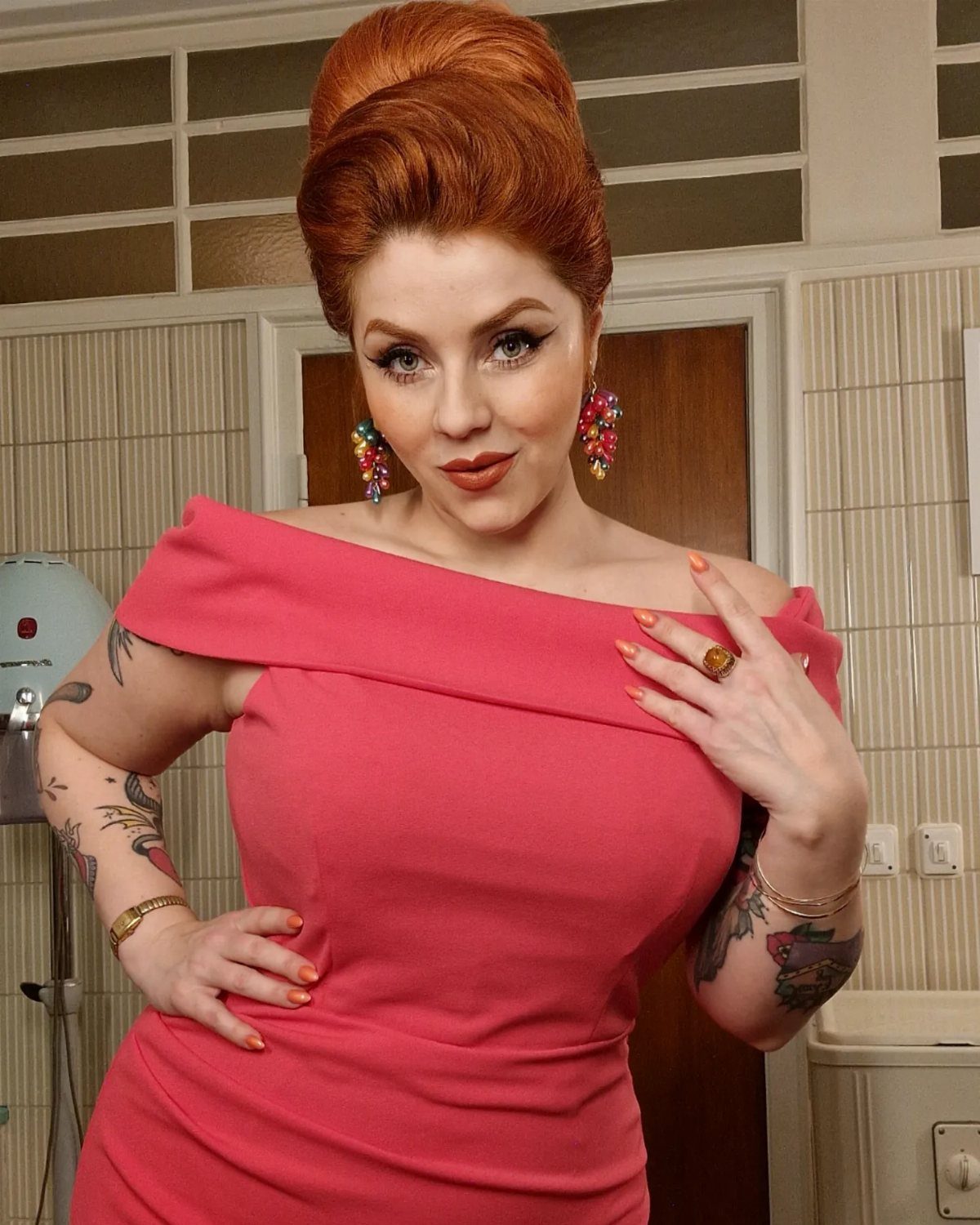
Close fit is what defines a sheath: the dress follows the body from bust to knee instead of flaring out.
An off-the-shoulder neckline, especially in pink, leaves a bare line across the collarbones that draws the eye up and balances a fitted skirt.
I like sheaths for anyone who wants the waist to be the focus without carrying a big skirt to a crowded party. They sit easier in a chair than a full swing skirt does.
Movement is where a sheath dress costs you: the narrow skirt limits your stride, so check that you can sit and climb stairs comfortably.
A slim cut limits your stride, so check that you can sit and climb stairs comfortably before buying.
4. 1950s Halter Dress
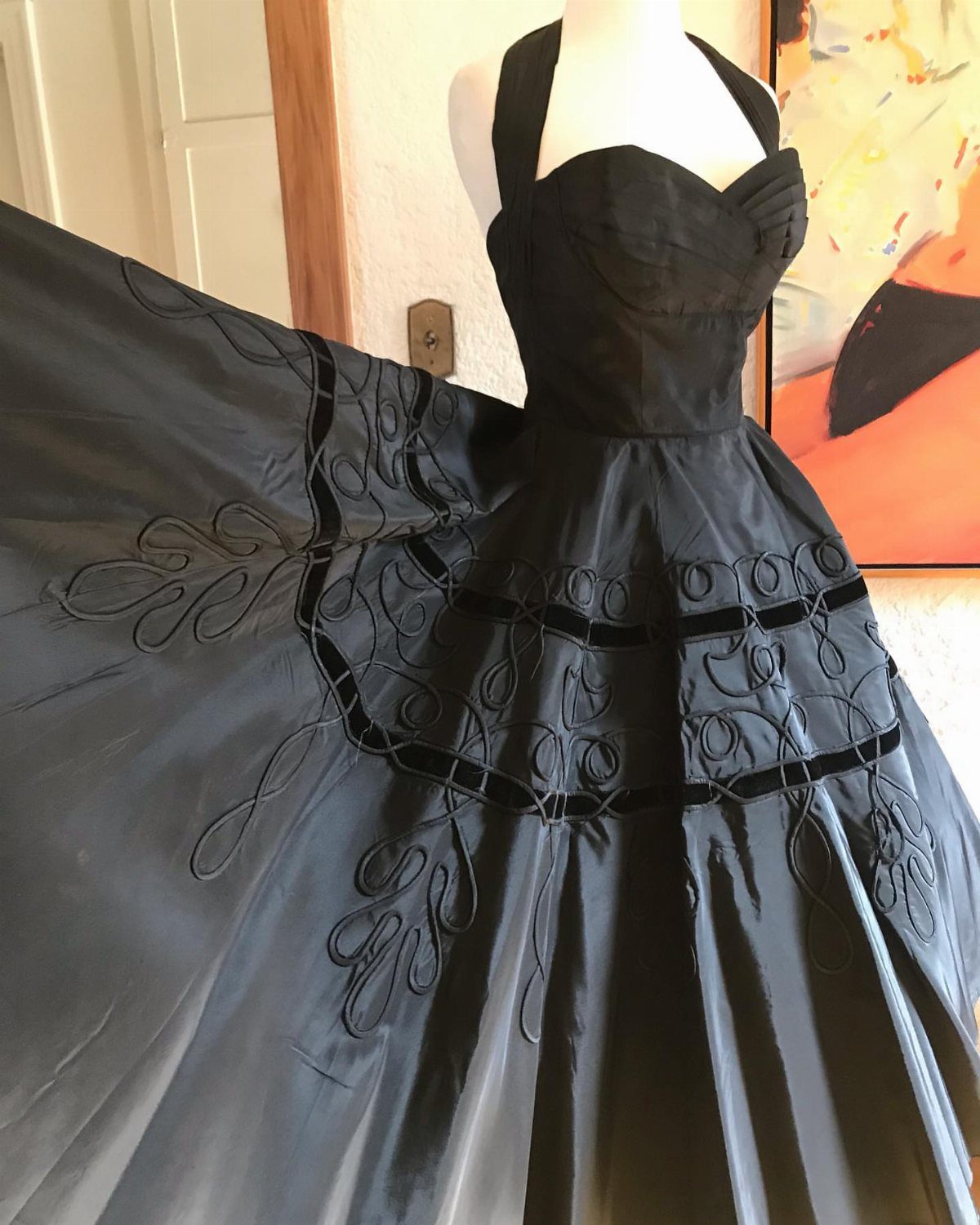
Bare shoulders and a fitted bodice make the halter a natural summer party choice. Embroidery over a full skirt keeps a black halter formal even in warm weather, and the open back and shoulders keep it from feeling heavy.
A halter ties or fastens at the neck, so it frames the shoulders and collarbones. I would choose it if you like showing your arms and want a neckline that lifts the eye upward.
Wear your hair up so the neckline stays visible. A bra with a halter-friendly design is worth sorting out before the party, since regular straps will show.
5. 1950s Tiger Print Chiffon Party Dress
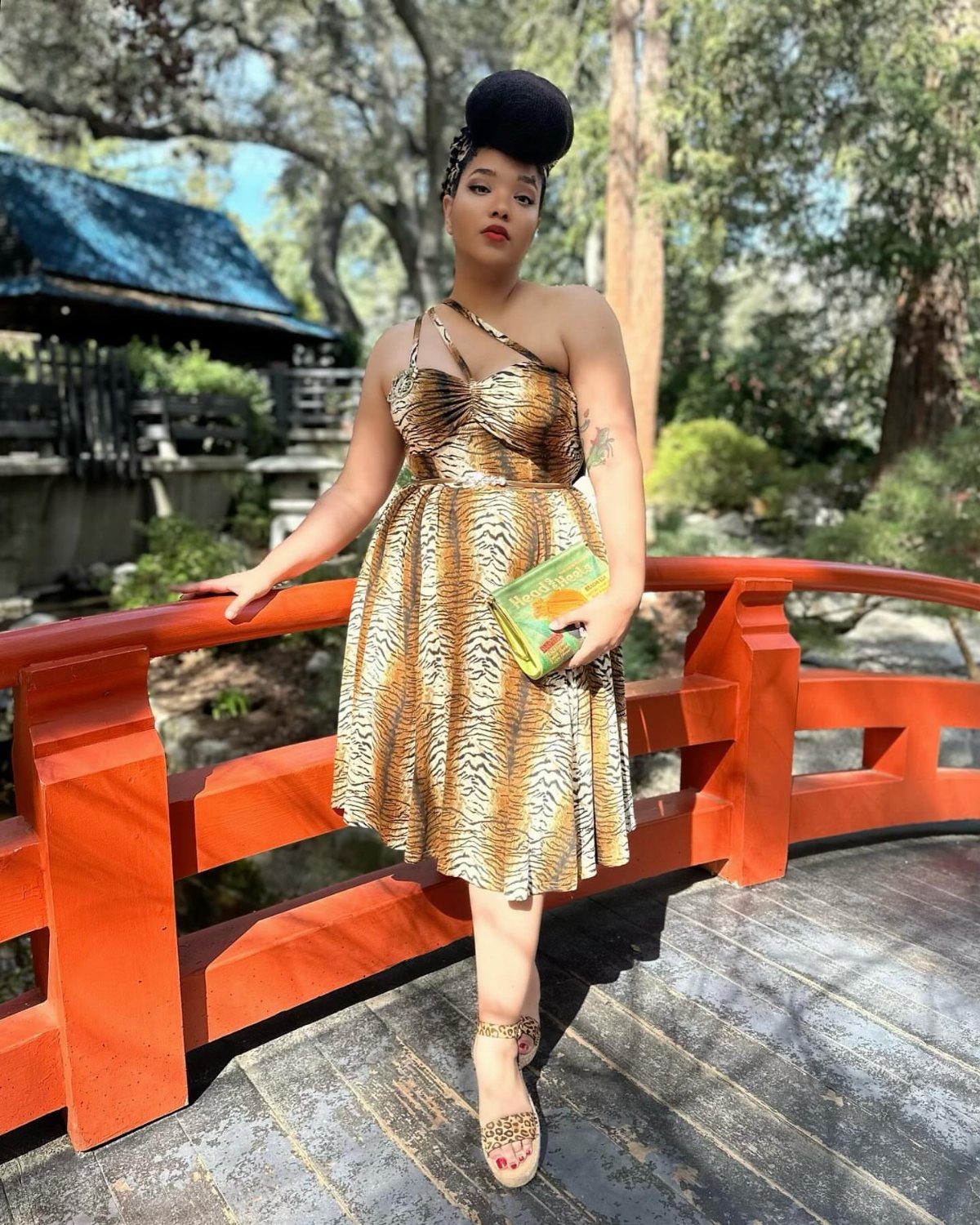
Tiger print is a bold step for a 1950s style party dress, and chiffon keeps it from feeling heavy. The fabric is light and floats when you move, which suits an outdoor party in a garden.
Because the print is already loud, I would keep everything else plain: simple heels, little jewelry and a neutral bag. Let the dress be the single statement.
Chiffon is delicate, so snagging is the main risk. Skip rough bracelets and handle the hem carefully.
6. 1950s Blue Floral Print Party Dress
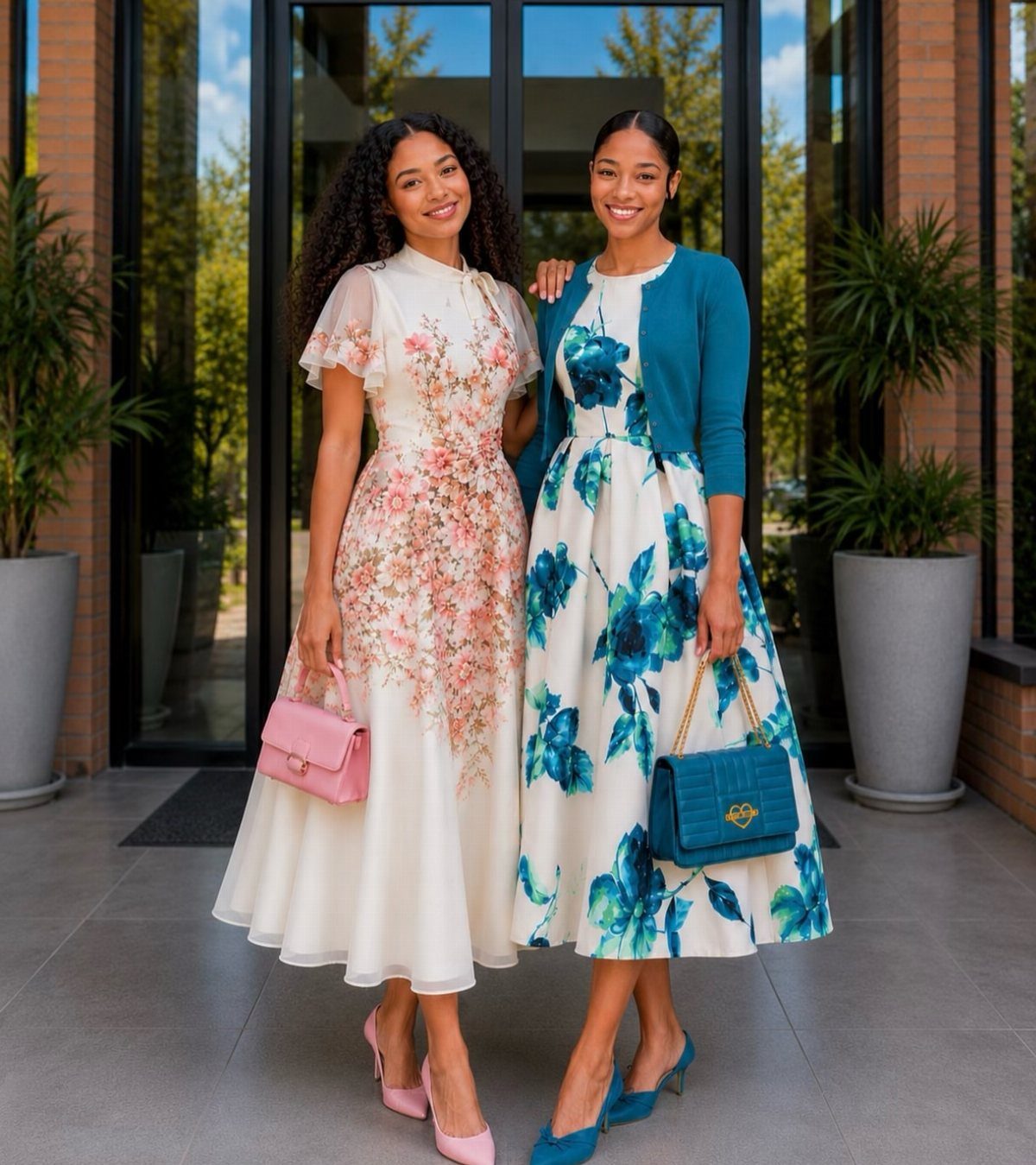
A blue floral print is the easiest way into a 1950s party look because it feels familiar and cheerful.
A matching handbag and a cardigan in a shade pulled from the print make the outfit look planned, and the cardigan covers your shoulders when the evening cools.
I would choose small to medium blooms on a solid background, since they read clearly from a distance without overwhelming a smaller frame.
A cardigan also covers your shoulders when an evening cools down, which makes this a practical option for a spring party.
7. Vintage Velvet Dress with Cape
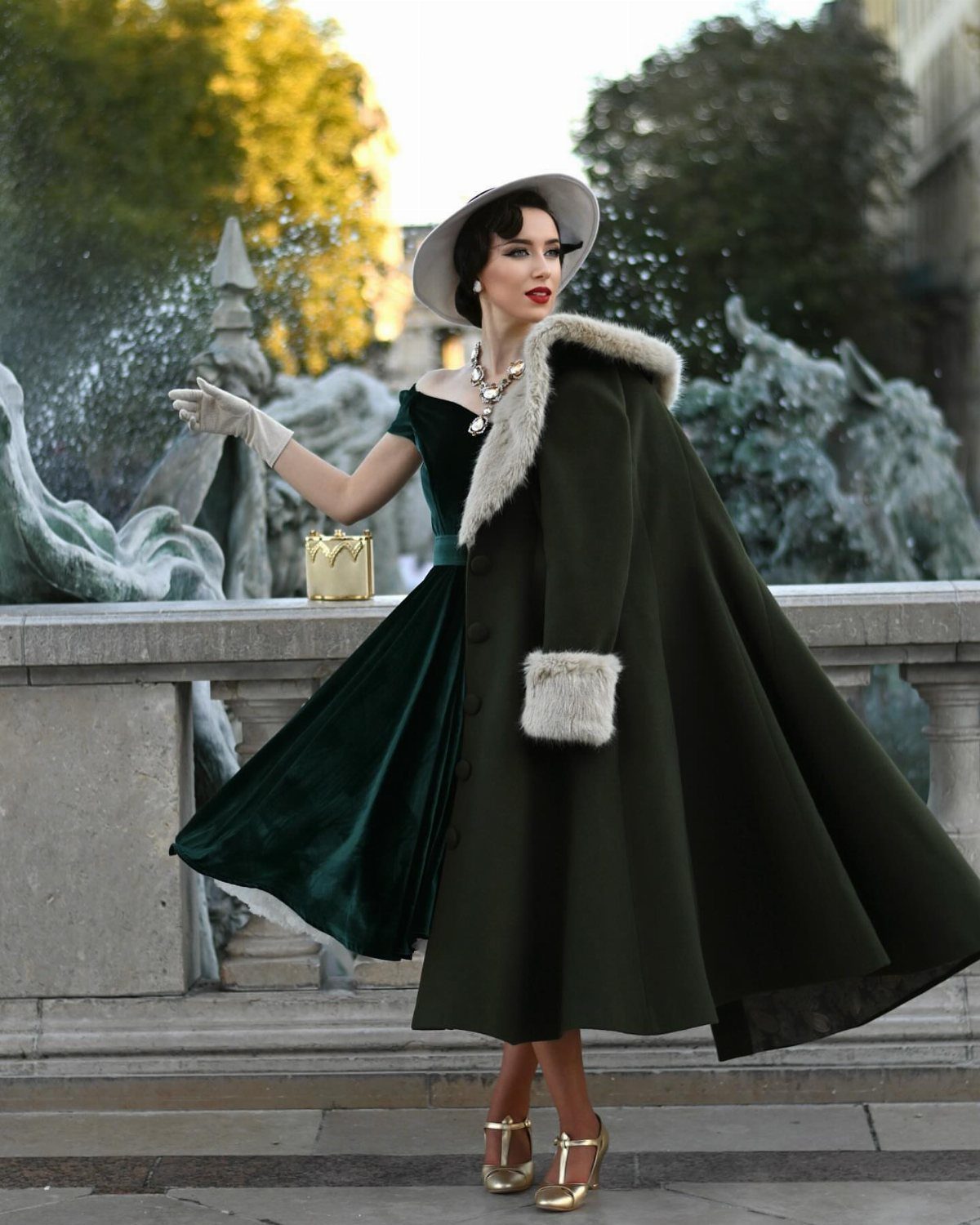
Velvet in a deep forest green looks richer than black under evening light, and a matching cape with a faux-fur trim does the work of a coat.
Because the cape matches the dress, the whole look reads as one piece rather than a dress with something thrown over it.
A white hat gives the dark green velvet a clean contrast, so I would keep the shoes and jewelry simple and let that one bright accent carry the outfit. Gold shoes pick up warmth without competing.
Velvet is heavy, which makes this a cold-weather party choice. The cape also covers your shoulders and arms, so you can skip a separate wrap.
8. Classic Black Velvet Dress
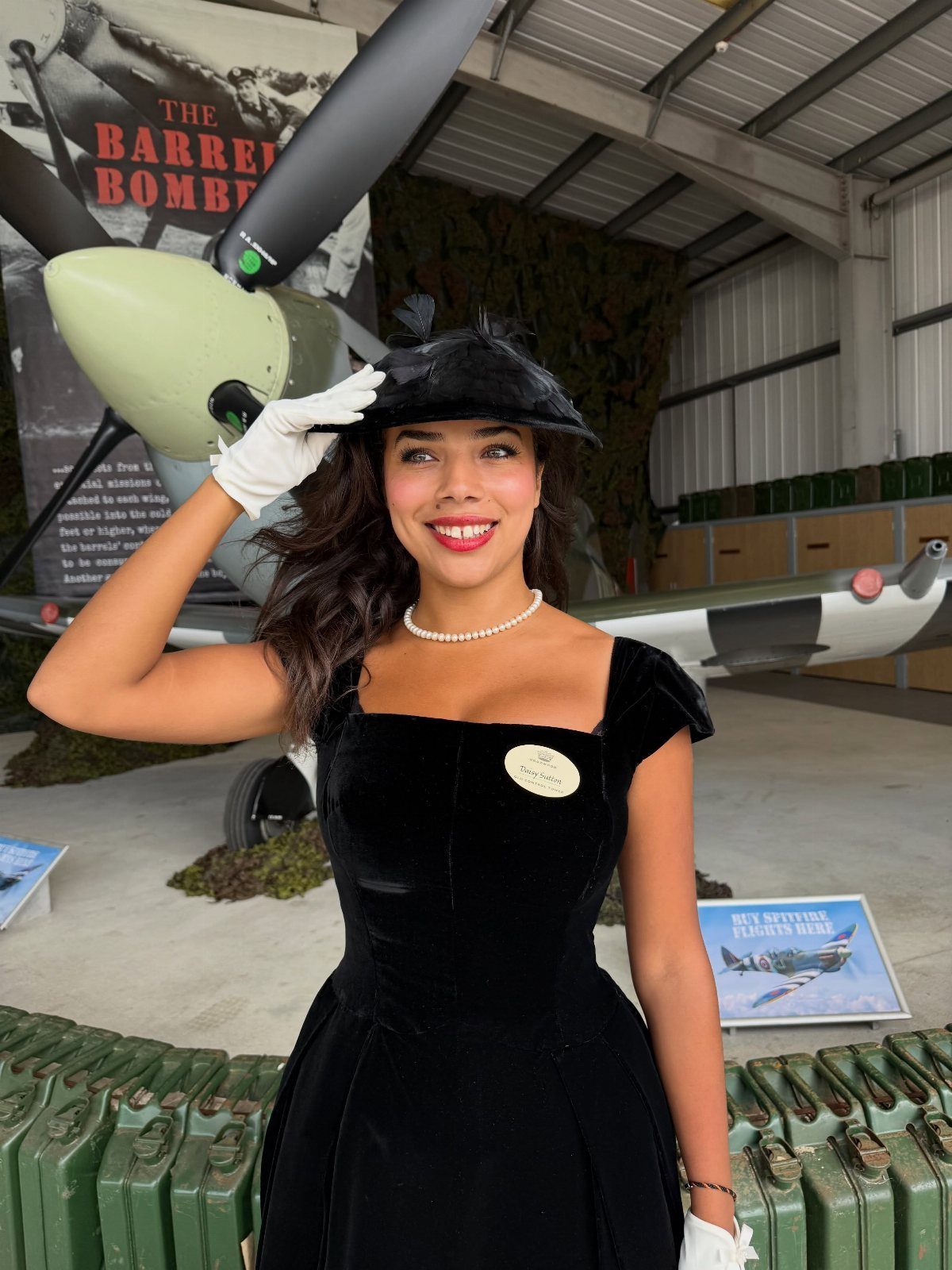
Black velvet, white gloves, a pearl necklace and a hat: that short list is the whole recipe, and each piece earns its place.
The velvet gives depth, the pearls add a soft light at the neckline, and the gloves break up the dark sleeves.
I would choose this for anyone who wants a dress that works at a formal party without a print or a bold color.
A solid black dress also leaves room to repeat the look with different accessories later, which suits buying fewer, better pieces.
Keep the hat modest and the pearls to one strand. With velvet this rich, extra jewelry only crowds it.
9. Puff Sleeve Floral Dress
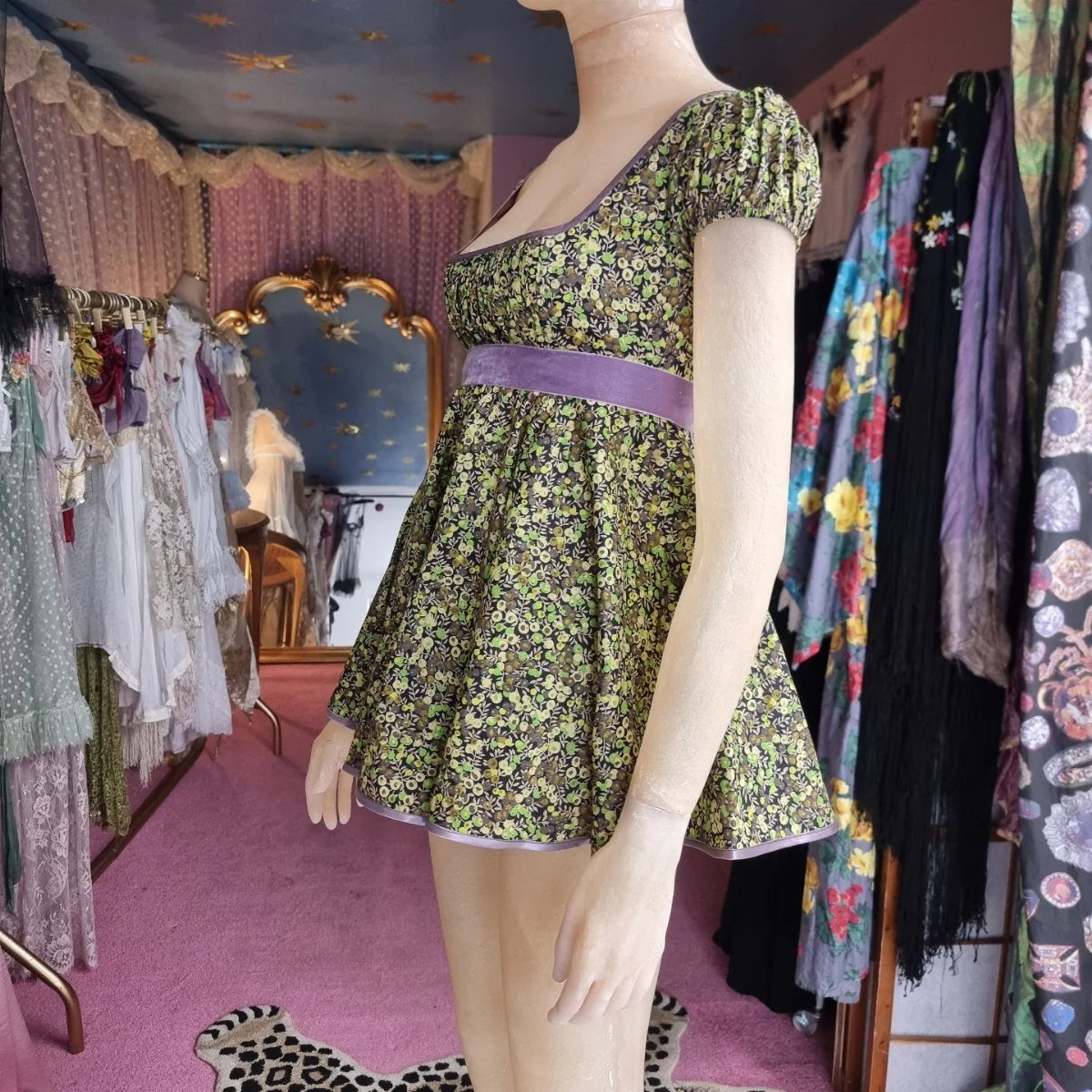
Short hemlines, puffed sleeves and a contrasting waistband give this green and yellow floral its playful, retro shape. The purple waistband cuts the print in half and marks the waist, so the dress stays fitted where it counts.
A busy print like this wants quiet accessories. I would pick plain shoes and a small bag in one of the print’s colors, and skip the necklace, since the puffed sleeves already add detail up top.
Puffed sleeves add width at the shoulders, so they suit narrower frames best. If you are broad through the shoulders, try one on before buying, because the sleeves will widen that line further.
Popular Fabrics for 50s Dresses
Fabric decides how formal a 1950s-style dress feels, so pick it before you pick the cut. Cotton suits leisure wear, and it was the usual choice for shirtwaist house dresses.
Daywear in the 1950s leaned on wool and linen, while rayon and polyester were the newer synthetics just entering closets.
For a dinner out, silk shantung is the fabric I’d reach for, since its crisp, slightly nubby surface looks dressier than cotton.
By the mid-1950s, fall dresses were often cut from tweed, usually a blend of wool and acetate. That is history, but a tweed-look dress still reads as a cool-weather choice.
Common Colors and Patterns
Pastels were popular across all clothing, and I find them the easiest shade to wear in daytime light. Jewel tones such as royal purple, ruby red, navy and emerald green suit evening parties better.
Allover patterns were used more and more: small or large florals, plaids, polka dots, gingham checks and stripes. Novelty prints with nautical, tropical or western themes also had their moment.
Prints sometimes ran only around the skirt border, which is a good option if you want pattern without a dress covered in it. Pick one pattern per outfit and keep the rest plain.
Dress Embellishments
Plain dresses were rare in this era, so detail at the neckline and trim is what makes a modern piece look right. Collars came in many styles: Peter Pan, wing, mandarin, middy, man-tailored, detachable, pilgrim and shawl.
Contrasting braid or piping along big pockets and cuffs gives the dress its shape and detail, so you can skip the extra jewelry.
Big buttons were part of the look back then, so pick a dress that puts them front and center instead of hiding them. If the collar and buttons already carry the detail, I would leave the necklace off.