The list runs from the Mid-century Crinoline Day Dress and the Working Class Dress and Apron to the Victorian Bustle Evening Gown, and what you can borrow depends on the proportion you want to wear now.
If you want fullness, keep it behind or below a fitted top, the way the Tailored 1890s Walking Suit and the Victorian Bicycle Bloomer Suit do; if you want something practical, the Late 19th-century Western Trousers Look and the Working Class Dress and Apron both translate into separates you can buy today.
1. Late Victorian Fashion
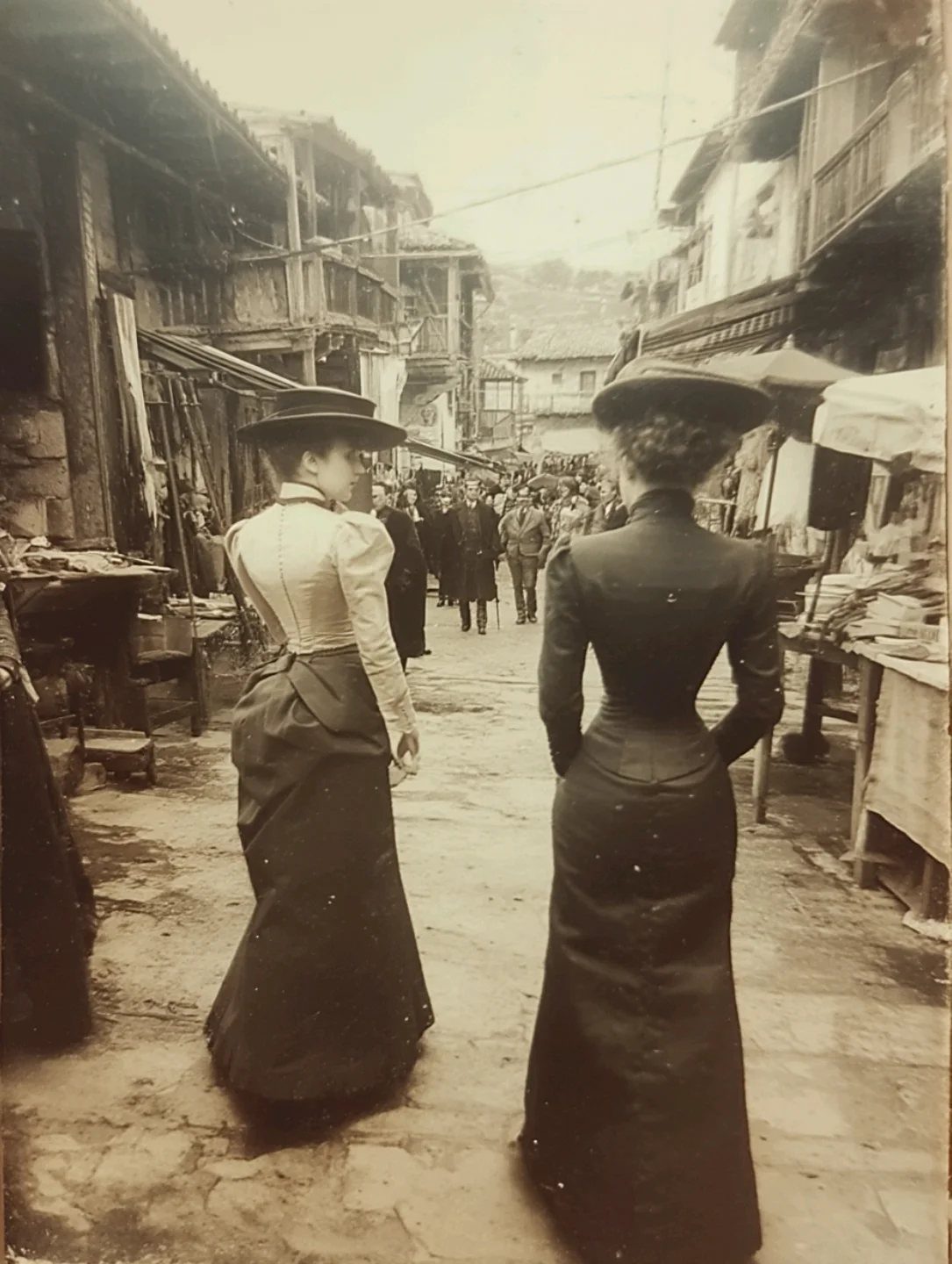
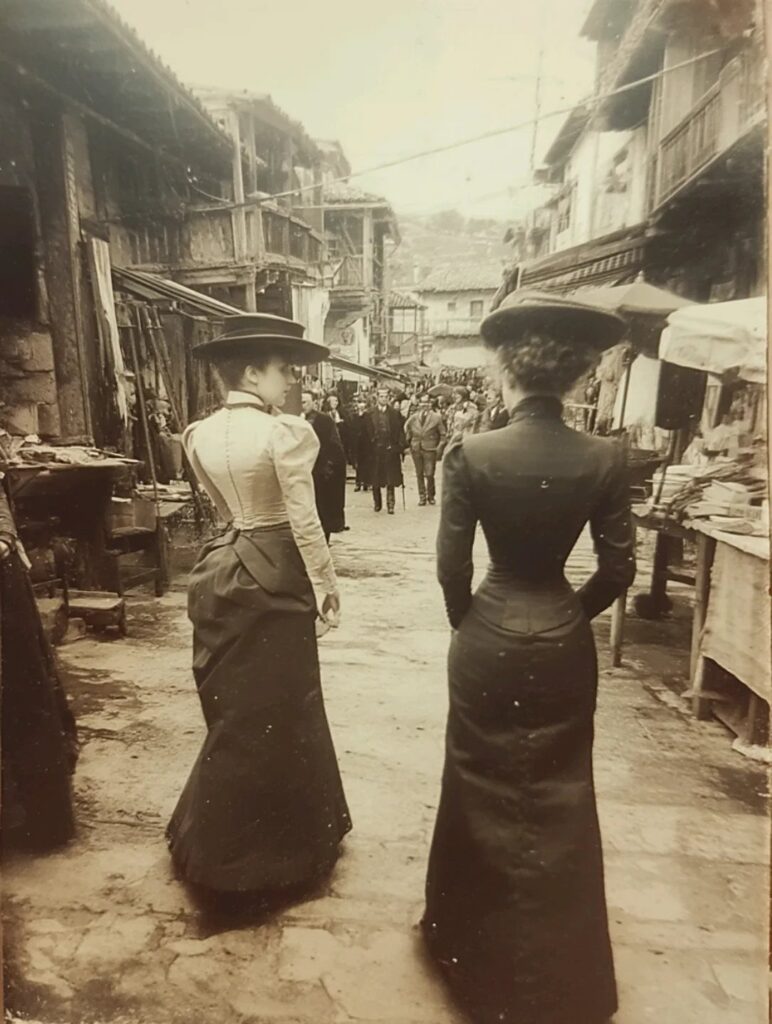
Bustle skirts and tailored suits for women define the late Victorian look, and both are still useful to study if you shop for structure.
The second bustle era pushed volume to the back of the skirt, which left the front slim and the waist sharply defined.
For modern buying, I’d borrow that proportion: a fitted top half with fullness concentrated behind or below. It flatters most body shapes better than volume all over, and it works with a hat for daytime.
Fashion in the period 1795–1820 in European and European-influenced countries saw the final triumph of undress or informal styles over the brocades, lace, periwigs and powder of the earlier 18th century.
2. Period Corsetry and Undergarments
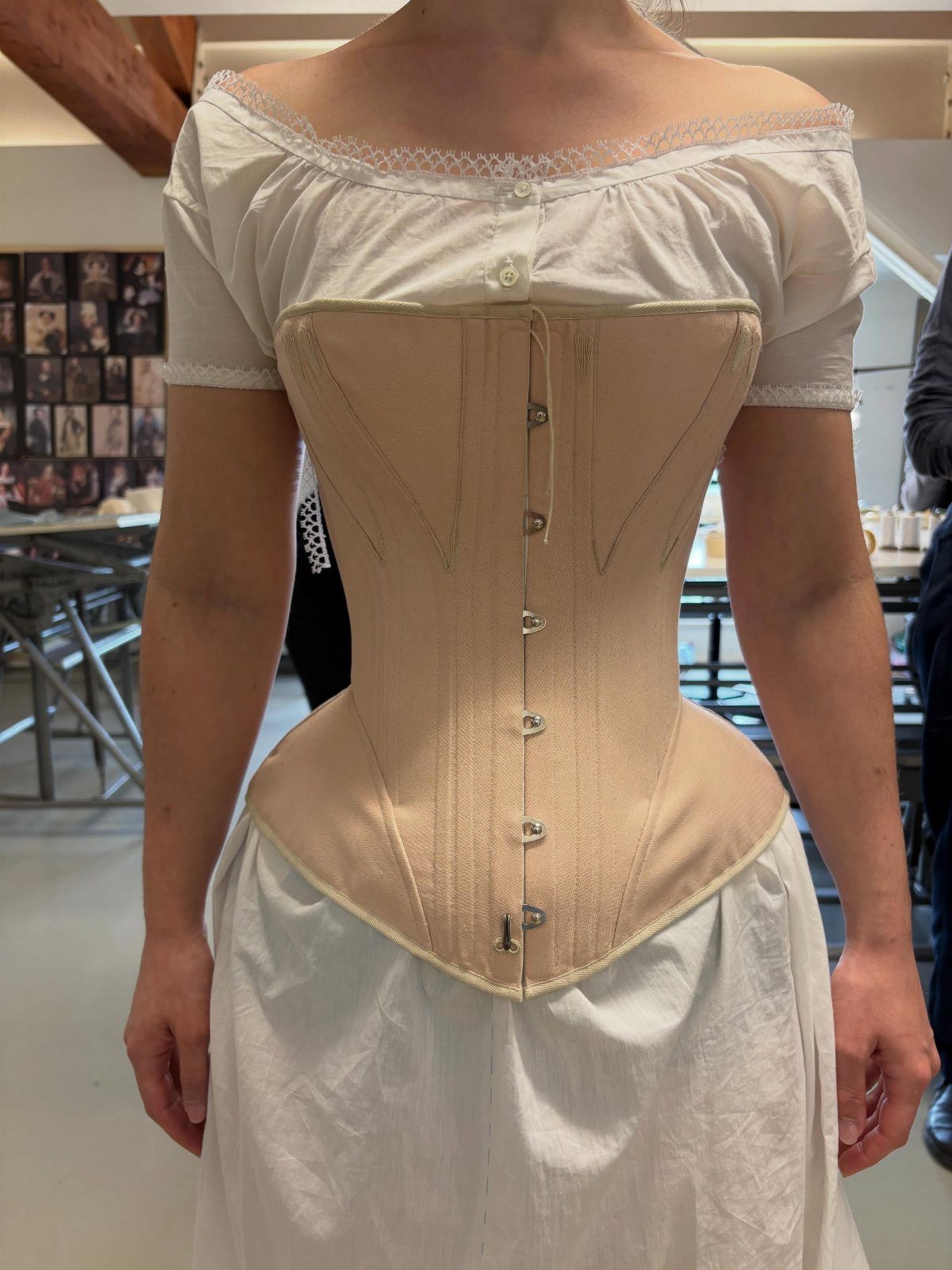
Under every period silhouette sits a boned corset, and the lace-trimmed chemise beneath it does real work. The chemise keeps the boning off bare skin and gives the neckline its soft, off-the-shoulder line.
A corset like this one laces at the back, so the fit is adjustable, which I like. Wear it over the chemise, never directly on skin.
Expect it to hold you firmly. It changes how you sit, so try it for a short stretch before committing to a full day.
3. Mid-century Crinoline Day Dress
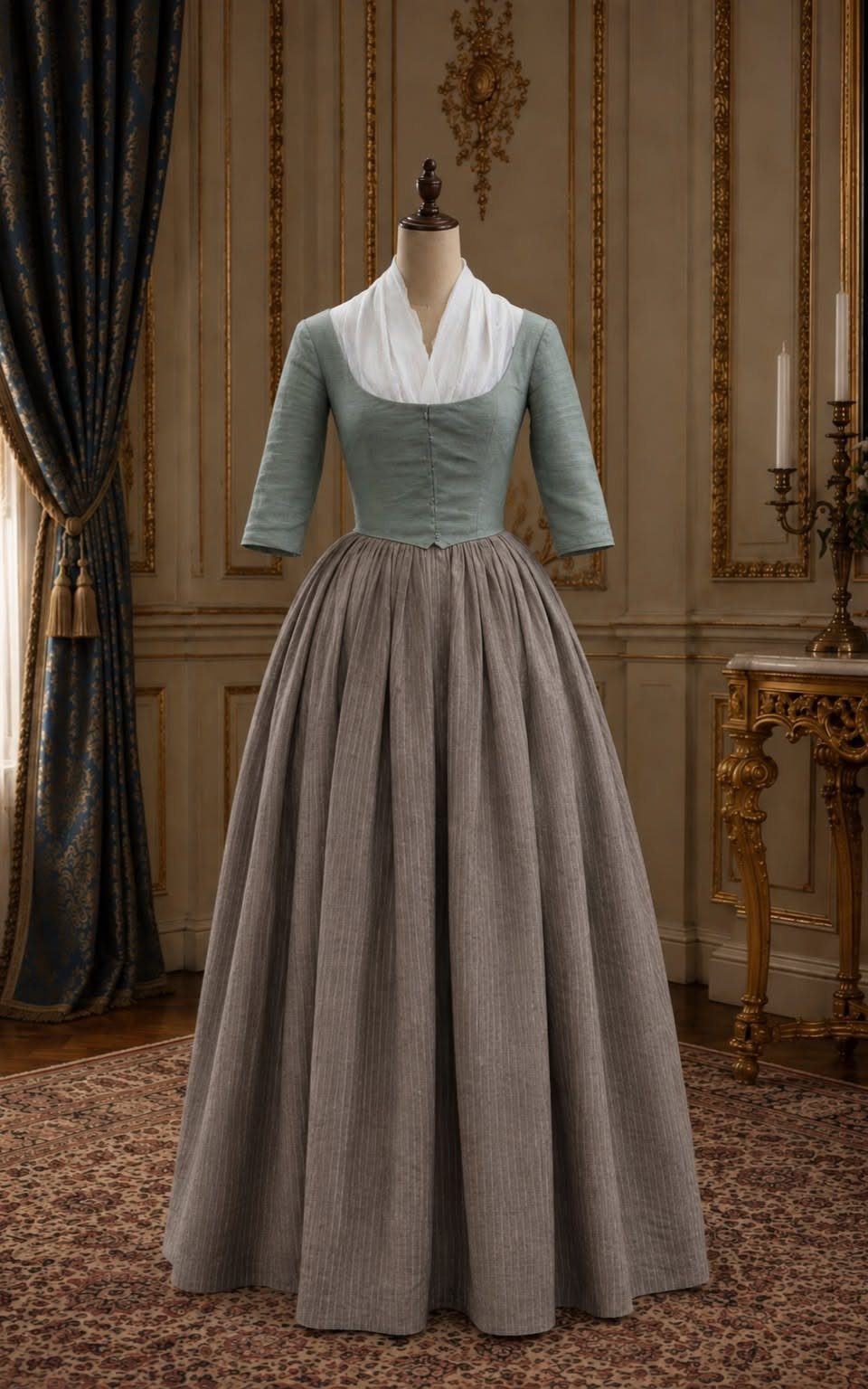
Light blue above, full pleated grey below: this day dress pairs a fitted bodice and three-quarter sleeves with a skirt that takes up real space.
The sleeve length is the detail I’d copy first, since it keeps the forearms free and still looks finished.
The skirt shape needs support underneath, so a dress like this only holds its line with the right structure. In everyday clothes, I’d take the same balance: a trim top and a pleated midi.
4. Tailored 1890s Walking Suit
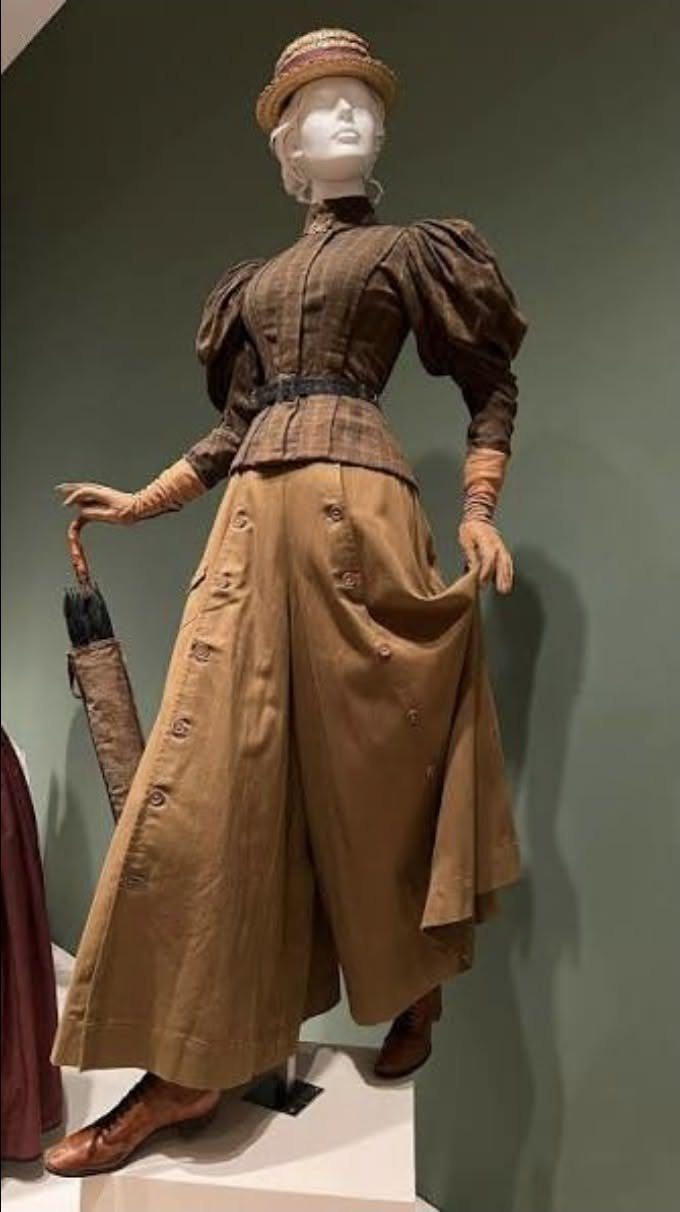
A walking suit is built around its shoulders. Leg-of-mutton sleeves swell at the upper arm, and a high collar plus an ankle-length skirt keep everything else narrow and vertical.
The brown here is a smart choice because a matching hat, gloves and parasol read as one outfit without extra color work. For modern wear, I’d pick one exaggerated element, such as the sleeve, and let everything else stay plain.
Ankle length also means you can actually walk in it.
5. Late 19th-century Western Trousers Look
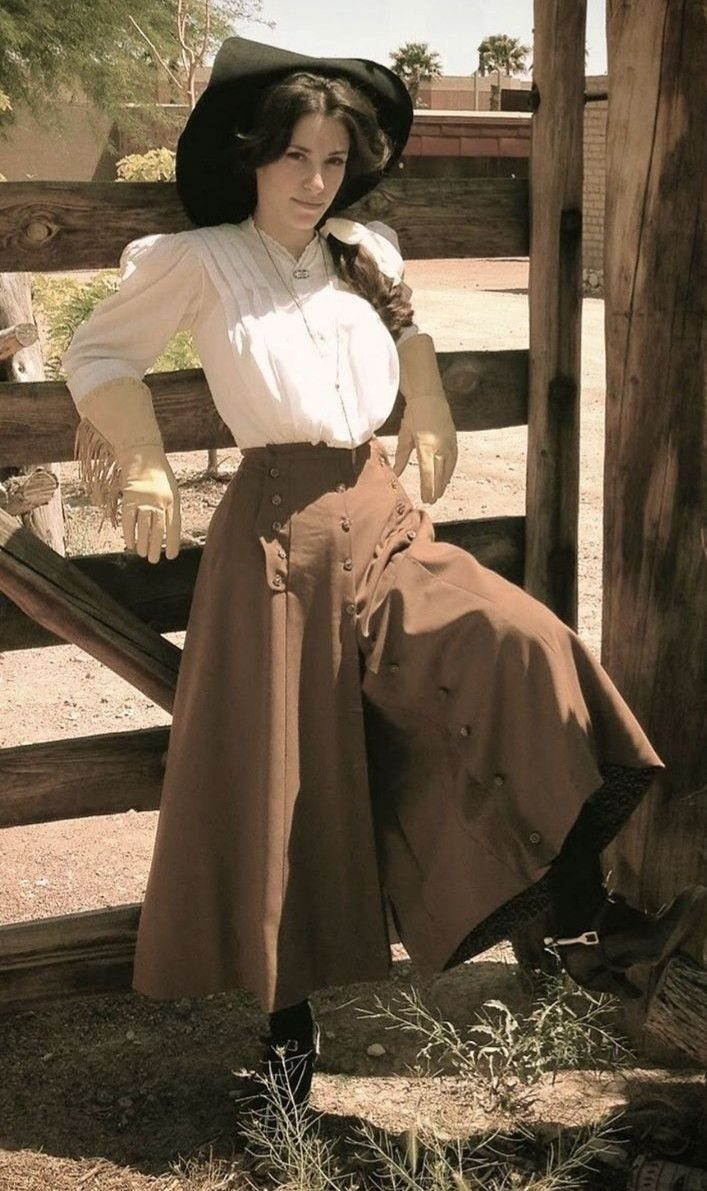
Trousers on a woman in this era look surprisingly current: high-waisted, wide-leg, brown, with a white long-sleeved blouse tucked in. The high waist lengthens the leg, and the wide cut keeps movement easy.
I’d copy the hat as much as the pants. A black wide-brimmed one frames the face and balances all that leg volume, and gloves finish it.
This suits anyone who wants a practical outdoor outfit built from separates they can buy now.
6. Victorian Bustle Evening Gown
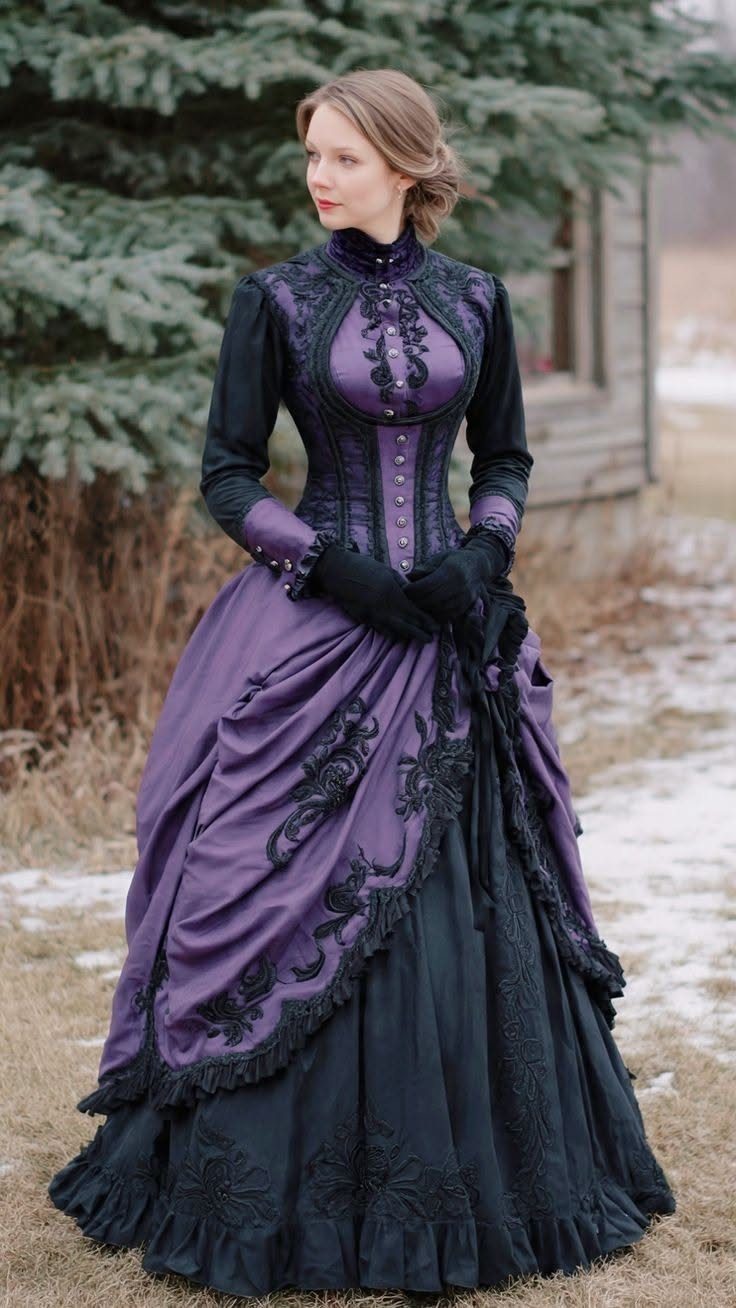
Purple and black make a bustle gown look dramatic without a single extra trim. The structured corset bodice sets a hard line at the waist, and the draped bustle skirt then swings out behind in an exaggerated shape.
Gloves complete it. If you wear something like this, plan for limited sitting; a bustle makes chairs awkward.
For a modern evening, I’d keep the fitted bodice and pick a skirt with draping only at the back. Dark, rich color does most of the work.
7. Victorian Bicycle Bloomer Suit
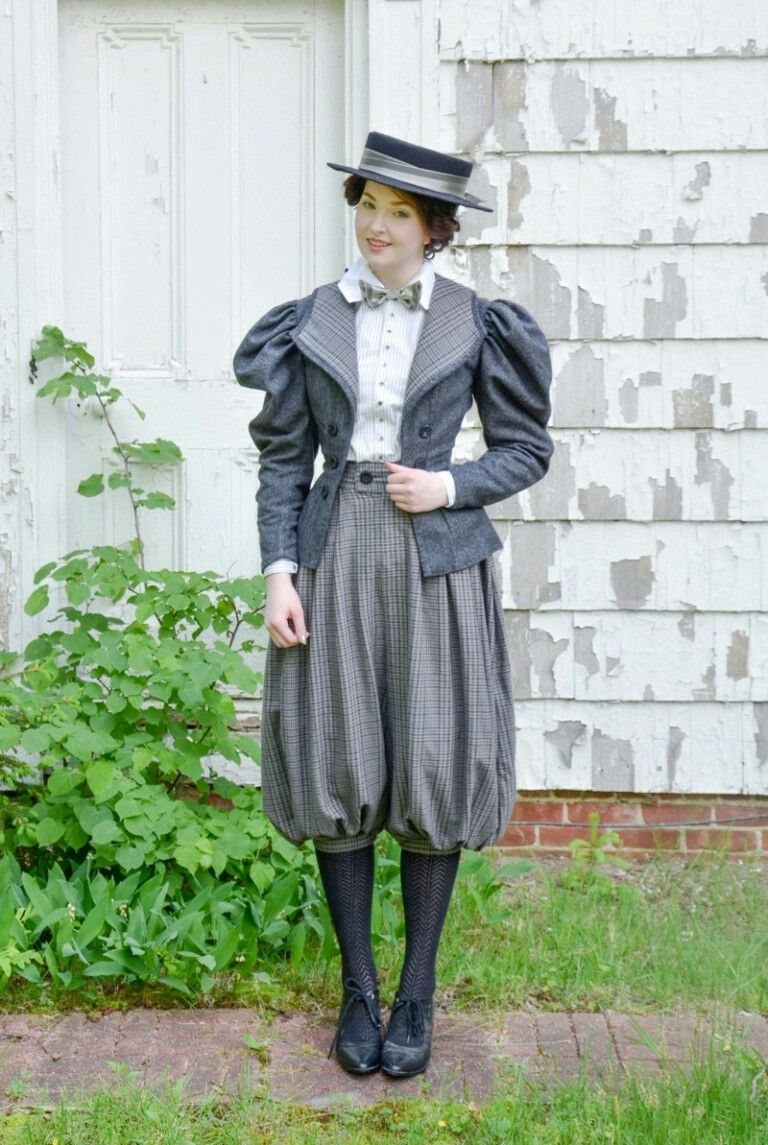
Bloomers are the reason this suit works on a bicycle: the fullness is gathered at the leg, so nothing catches while you move.
A puff-sleeve jacket in grey pinstripe keeps the top half tidy, and the bowtie and boater hat make it read as a deliberate outfit rather than a costume.
For modern wear, I’d take the pinstripe jacket and a full, gathered short or cropped pant, then skip the rest. Volume on the bottom needs a fitted, structured top to balance it, and this jacket does that.
The hat is optional, though I like it.
8. Working Class Dress and Apron
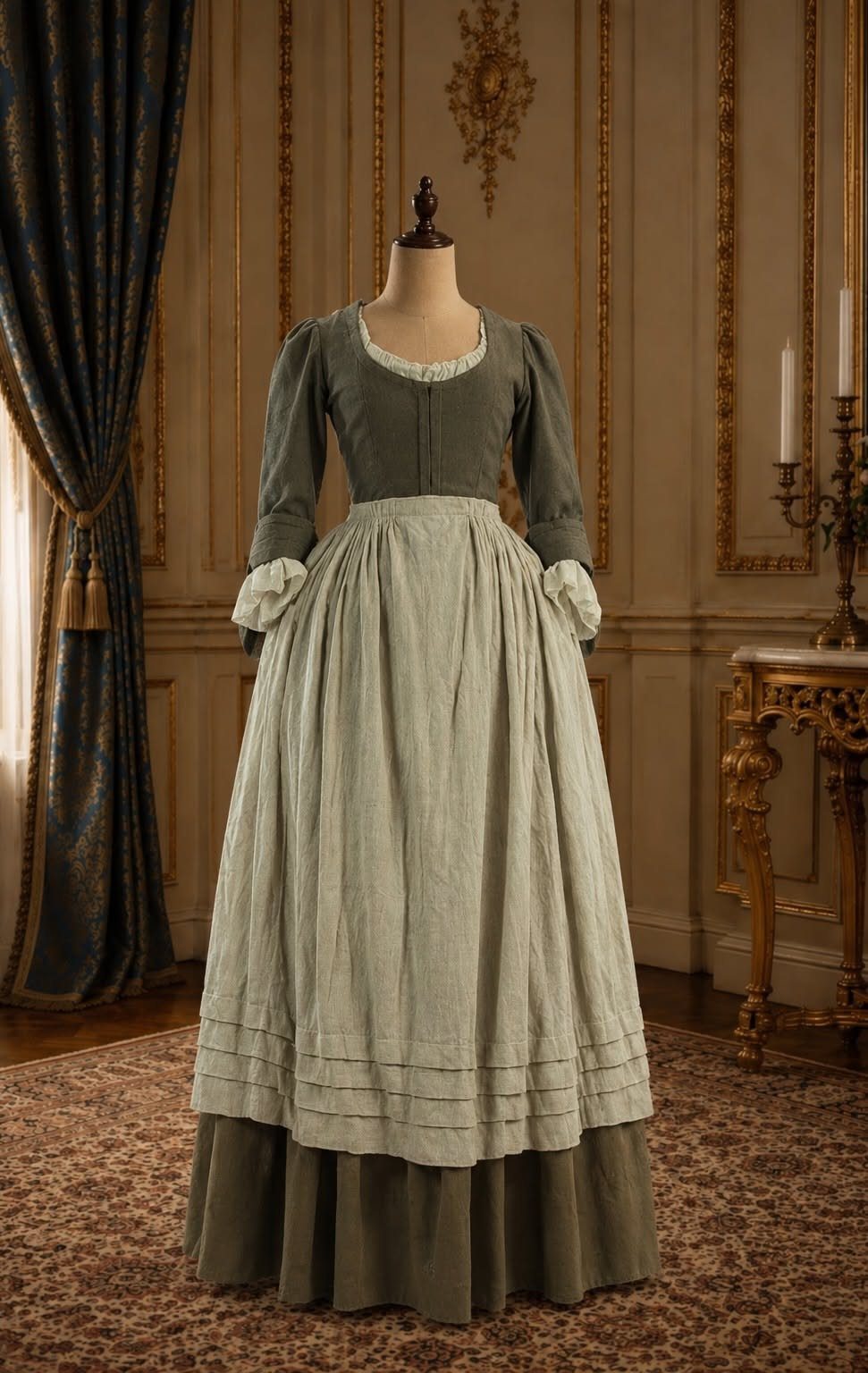
A plain white apron over a grey long-sleeved dress is about as practical as period dressing gets. The apron takes the wear, and the matching white cuffs can be removed and washed, so the dress itself stays clean.
That layering idea carries over well. I’d pair a simple grey shirtdress with a crisp white apron-style overlay, such as a pinafore, for a polished look that suits most body shapes since nothing clings.
Keep the grey dress quiet and let the white pieces supply the contrast. It’s a good lesson in buying one hardworking base and adding easy extras.
Impact of Industrial Revolution
Sewing machines changed who could own well-made clothing. Production got faster and cheaper, so fashion reached more people than it had when every seam was stitched by hand.
That shift still shapes how I shop.
Cheap and fast is easy to find now, so I judge a garment by its seams and fabric rather than its price. Check that stitching is even and the fabric feels substantial before you buy.
Fashion for Different Occasions
Dressing by time of day was a real system. Women had a morning dress, a walking dress, an evening dress and riding habits, each suited to its activity and to social expectations.
That logic still works for a wardrobe built on quality. Instead of buying one more all-purpose piece, ask what the occasion needs: something easy for the morning, something polished for afternoon errands or work, something dressier for the evening.
Accessories did the quick changes then. Hats, gloves, shawls, parasols and small handbags (called reticules) shifted an outfit’s formality, and a scarf, structured bag or good pair of gloves can do the same for you now.
Materials Used in Fashion
Fabric choice followed function. Cotton and linen sat against the skin in undergarments, while silk and taffeta were saved for evening gowns.
I’d shop the same way. Put breathable natural fibers closest to your body, and spend on the dressy fabric only where it will be seen.
Earlier decades leaned on pastels, sheer drapes and lace trim, and later ones moved toward heavier shapes.
For a period look that still feels modern, pick a single detail like lace trim or a soft pastel and let everything else stay plain.