Your own proportions decide which of these looks to wear: a long coat over a slim base adds height, a waist-defining cut follows curves, and one piece should carry the volume while everything else stays close to the body.
The ideas run from a single piece, like a squishy bag or a pair of ankle boots, to a full outfit built on a statement coat or a plaid maxi skirt, and the effort runs from "add one item" to "match several shades of brown."
Rust blouses, burgundy boots and a red, black and white palette keep the color earthy and tight, so pieces you own are easier to repeat.
1. Ankle Boots
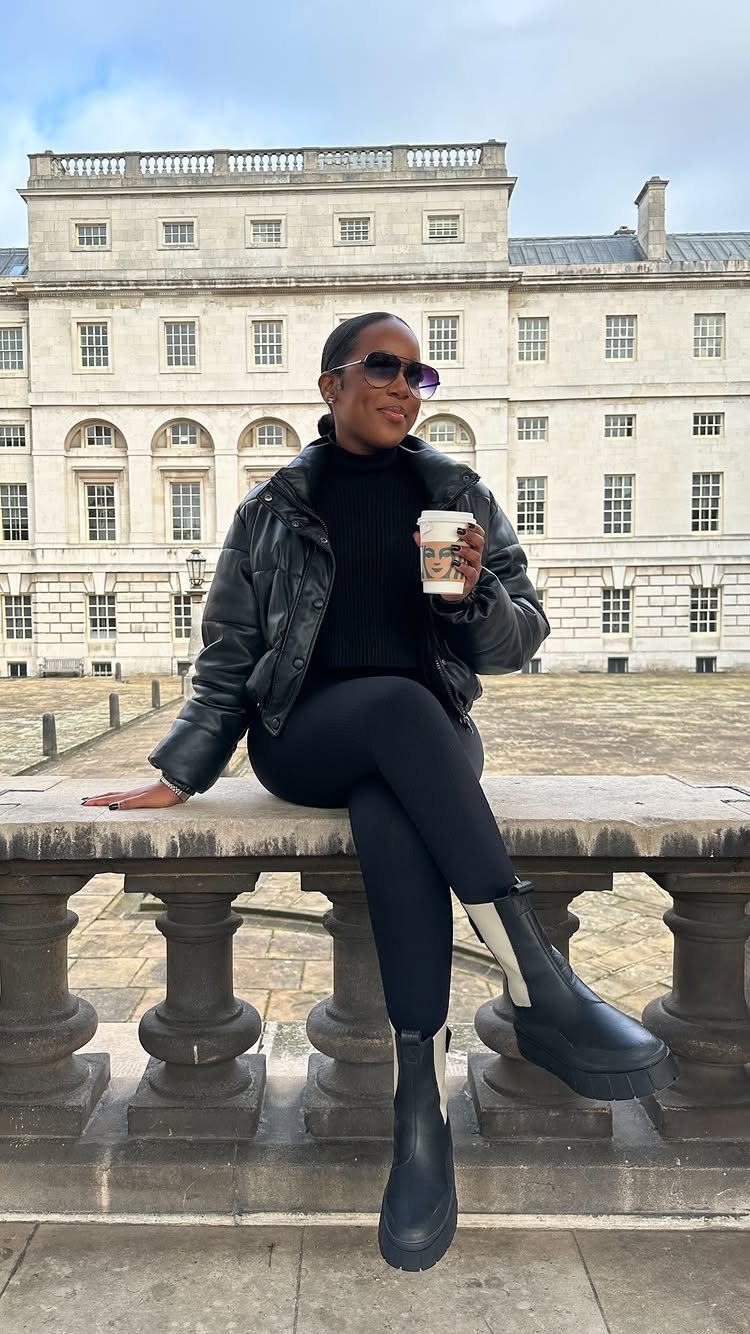
A chunky sole is what makes an ankle boot work for cold months: it lifts the hem off wet pavement and gives the outfit a grounded, slightly sporty edge.
Black ankle boots with a white accent read as a sneaker-boot hybrid, and they suit leggings, a puffer or a leather jacket equally well.
I would pick this over a sleek heeled bootie for daily errands, since you can walk a few miles in it and still look put together.
Bulk is what you give up: a lugged or sneaker-style sole adds weight and visual heft, which can overwhelm a slim ankle or a cropped, narrow leg.
Chunky boots make slim ankles look heavier, so keep the trouser or legging leg clean and narrow above them.
2. Statement Coats
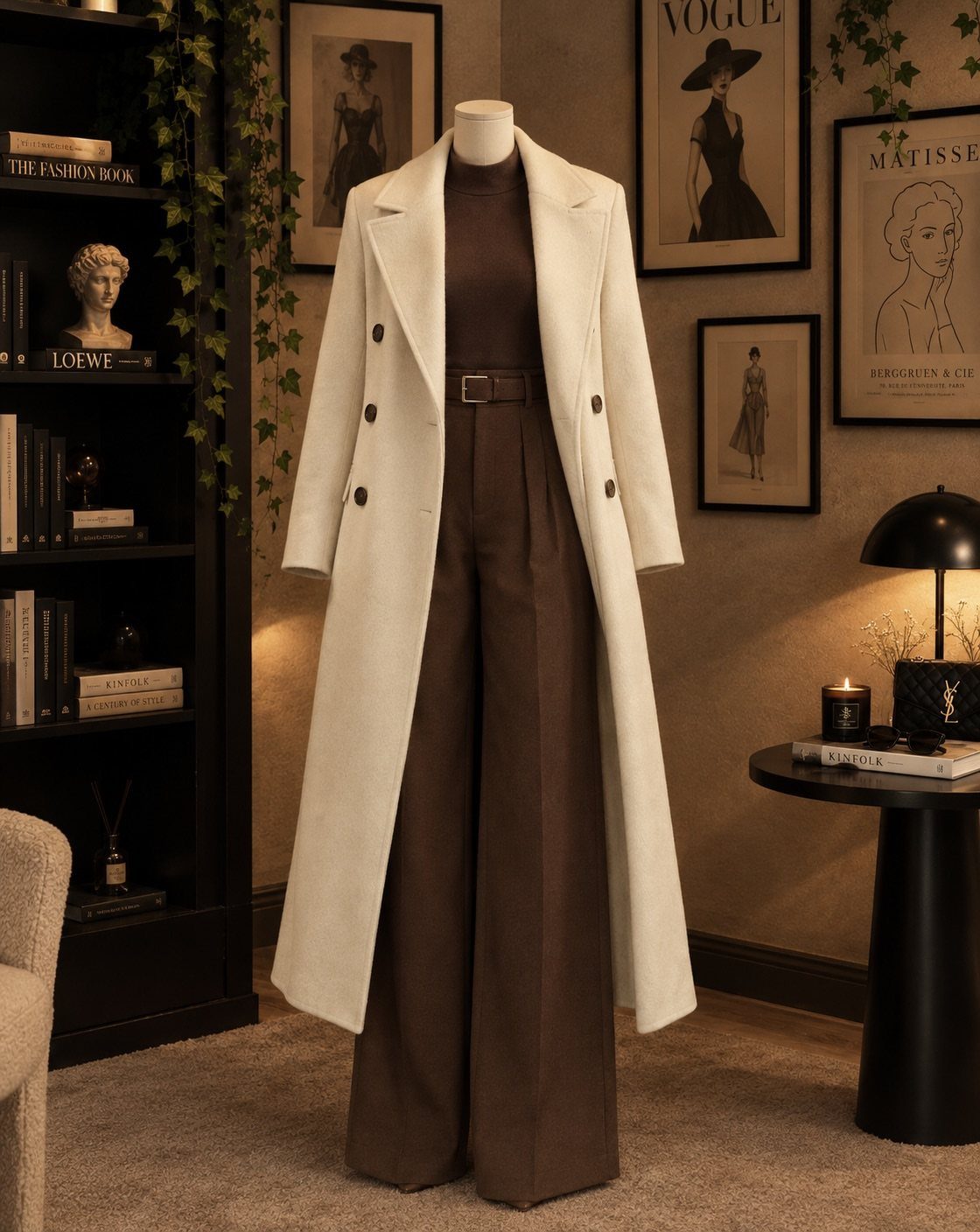
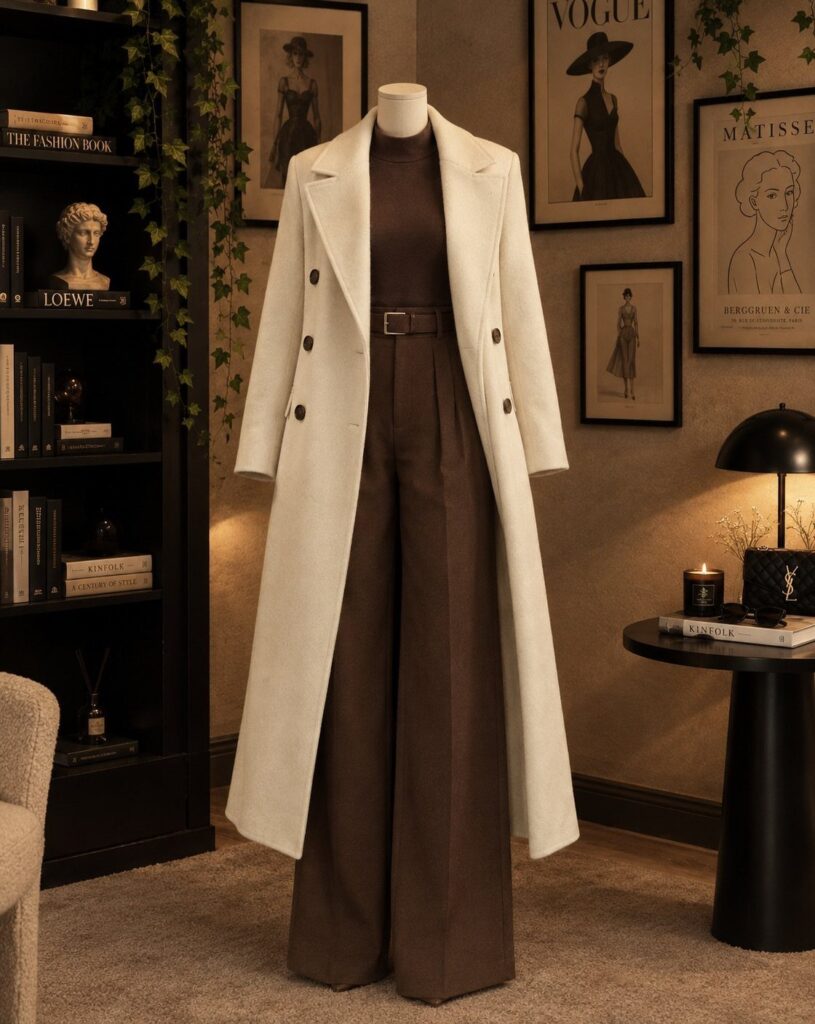
A long white coat does the work of an entire outfit, which is why I treat it as an investment piece rather than a trend buy.
Over a brown top and wide-leg brown trousers, it shows how one pale layer can sit on top of an earthy, tonal base without competing.
Choose a coat that reaches below the knee and has structured shoulders; it will hold its shape over bulky layers.
White does mean dry cleaning and careful seating on the bus, so I’d wear it on days with a short, clean commute. If that worries you, camel gives the same statement with far less upkeep.
3. Chunky Knit Jumpers
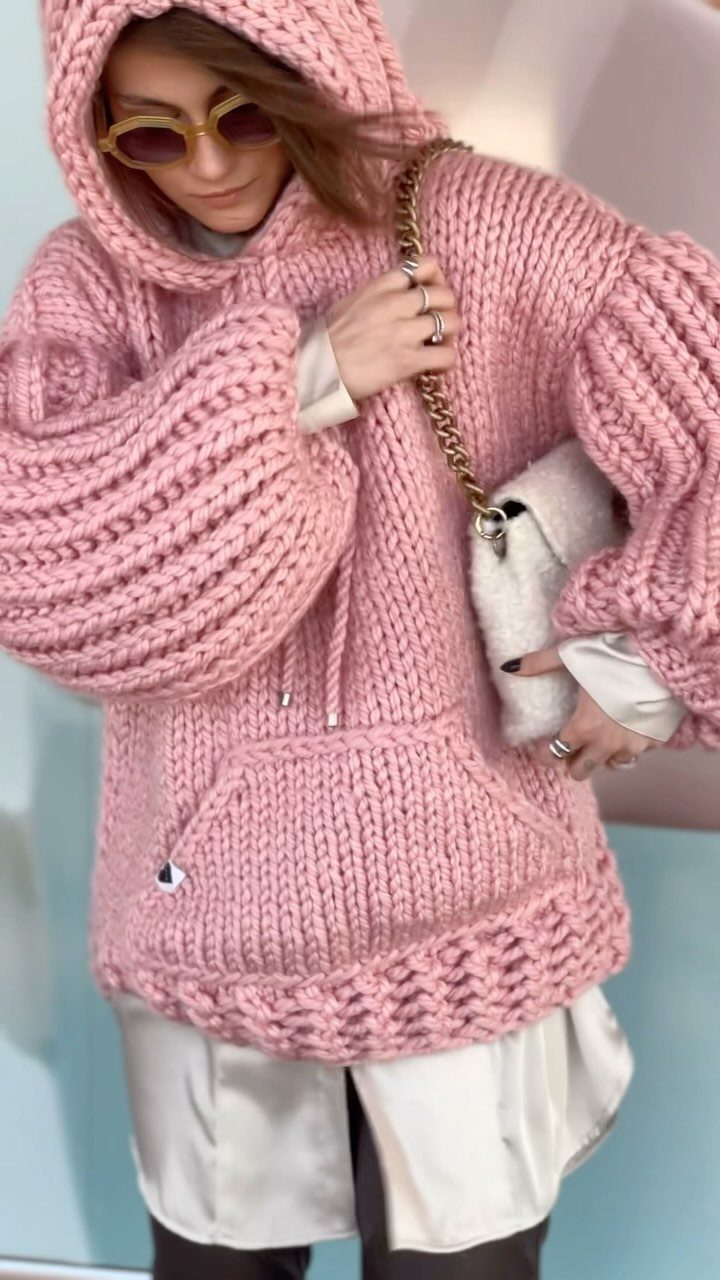
Oversized and hooded, a pink chunky knit turns a plain white shirt into something that feels deliberately relaxed.
Slouch is the point, so skip the usual sizing down; I’d buy your normal size or one up, and let the shoulders drop.
Because the knit carries the volume, keep everything beneath it slim: a crisp shirt collar peeking out, and fitted pants or a straight jean.
A fuzzy white bag picks up the softness, though a plain leather one keeps it more grown-up.
Wool blends hold their shape better than fully acrylic ones after repeated washes.
4. Tailored Blazers
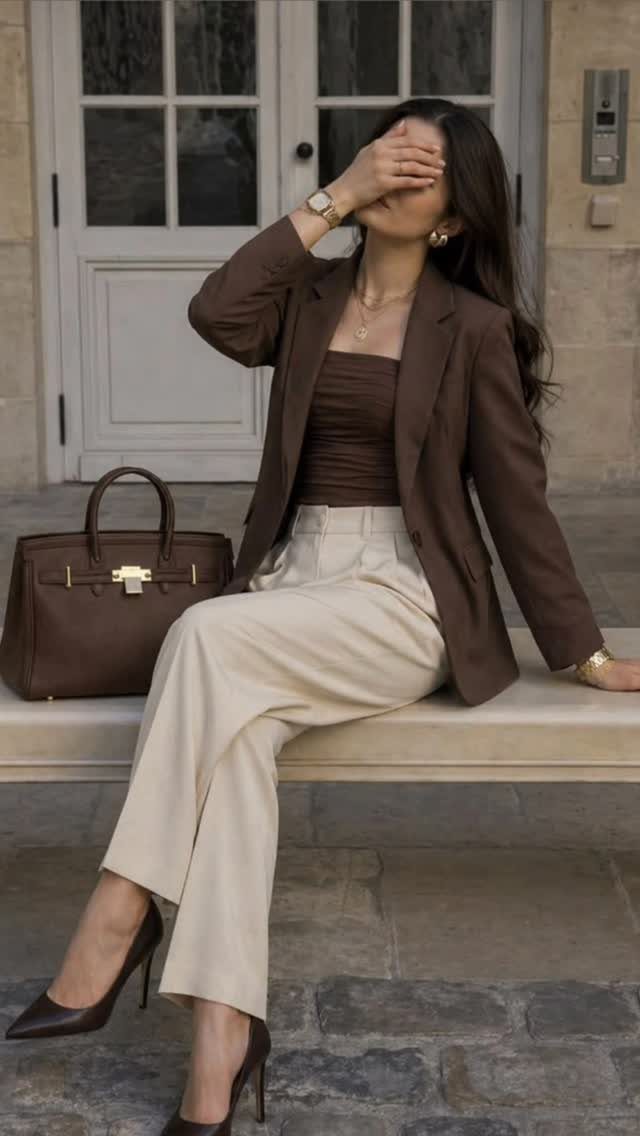
Brown tailoring in place of the usual black is the quickest way I know to make a blazer feel rich.
Matched with cream trousers and a brown top, it keeps the palette to 2 warm neutrals, and gold jewelry or hardware finishes it.
Buy for the shoulder seam first: it should sit right at the bone, since a tailor can shorten sleeves easily but can’t rebuild shoulders.
This look works at the office, at dinner or on a weekend with flat shoes. Cream trousers show every mark, so keep a stain pen handy.
5. Flowing Blouses
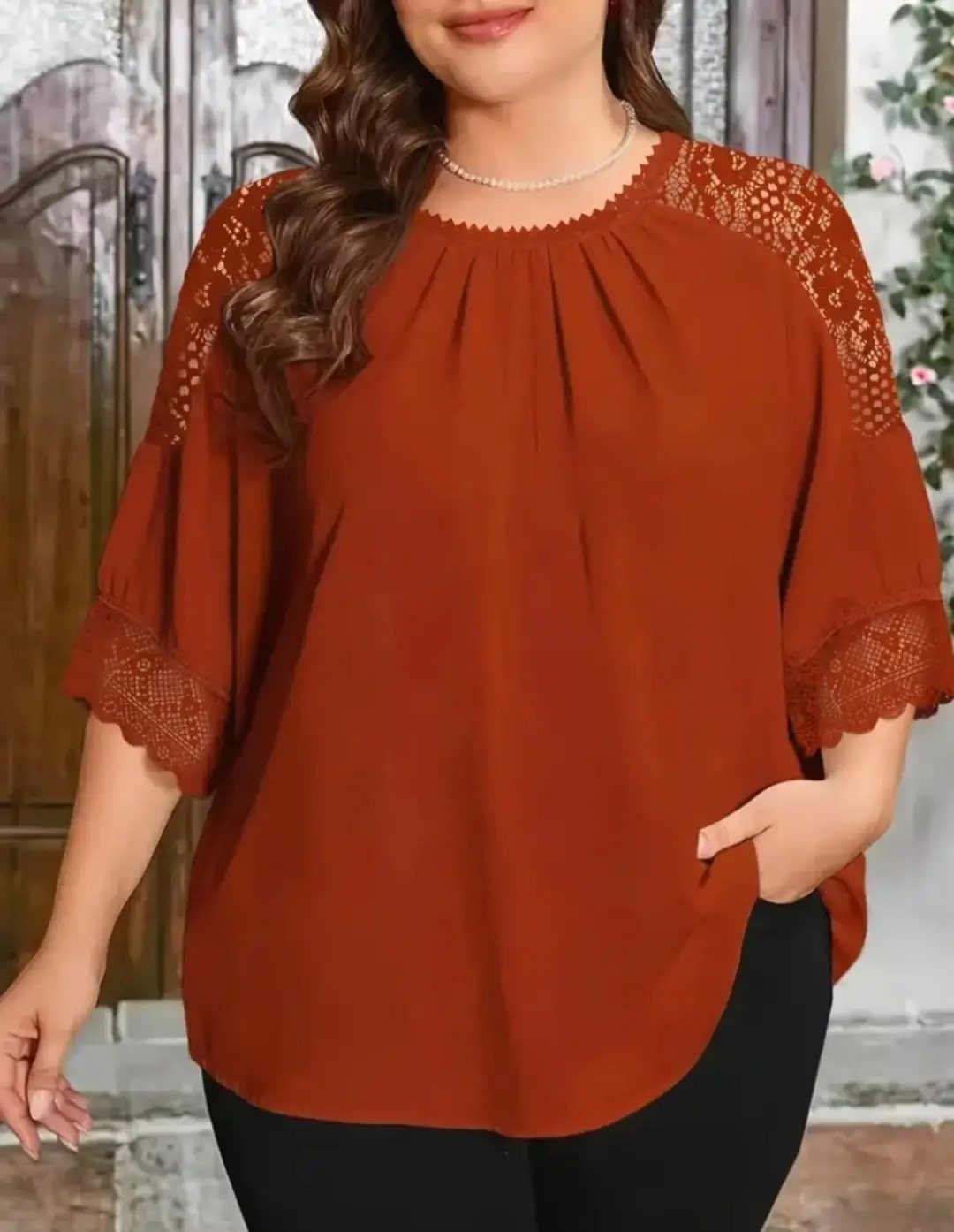
Rust is a smart autumn color for a blouse, warmer than red and easier to wear than orange. A flowing cut with lace detailing gives soft movement against black pants, which keep the whole outfit sharp rather than fussy.
I’d tuck only the front hem so the fabric still drapes. Lace trim at the neckline or cuffs means you can skip a necklace.
Delicate fabric and lace need a mesh bag in the wash, or hand washing, to last more than a season. For colder days, layer a fitted blazer or a long coat on top.
6. Squishy Bags
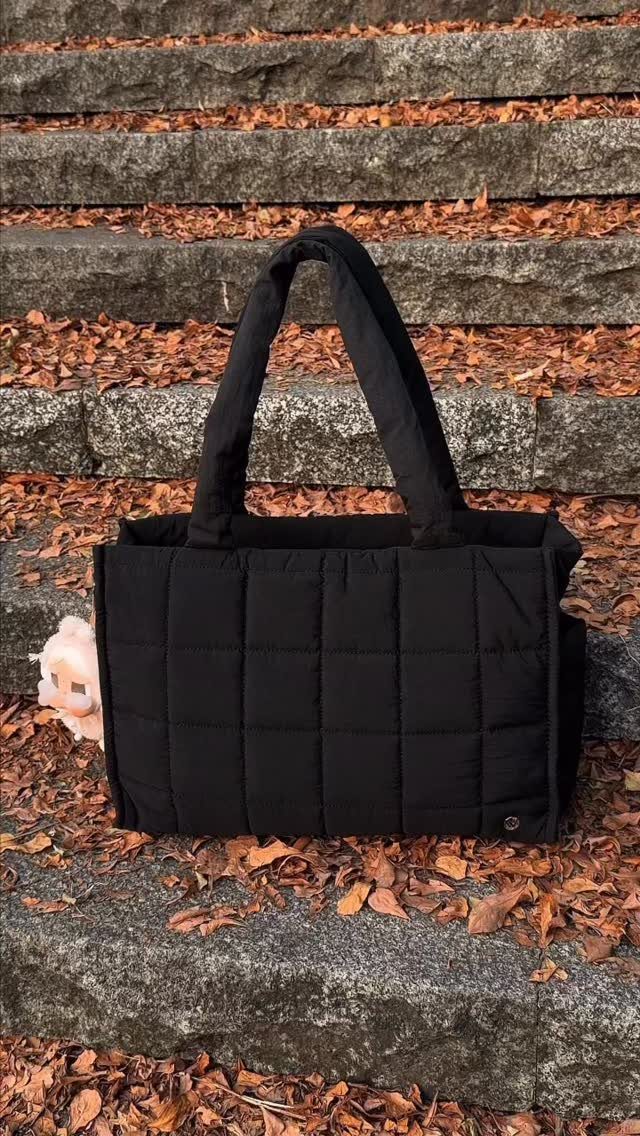
Quilted and puffy, a black tote like this one feels more like a pillow than a purse, and that softness is why it works so well for autumn.
It slumps comfortably on the arm and holds a lot without stiff edges.
Black keeps it neutral enough for jeans, coats and knits alike, so it earns its place across several outfits.
The downside is structure: a squishy bag can’t protect a laptop or hold its shape when it’s empty. Use a small pouch inside to keep keys and cards from sinking to the bottom.
7. Plaid Maxi Skirt
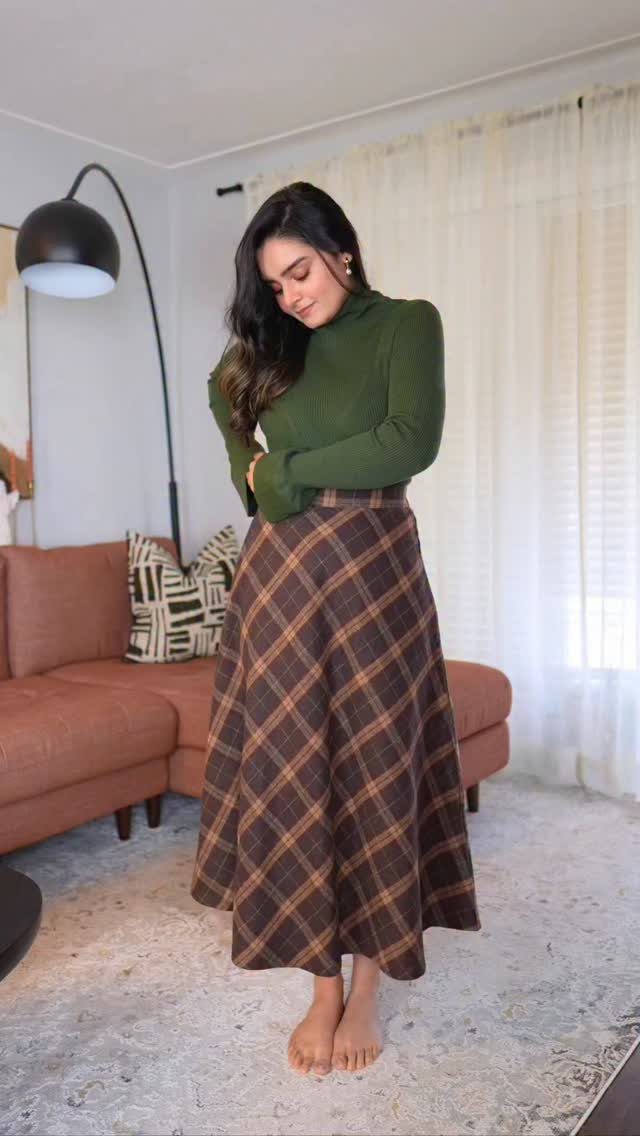
Tucking a fine-gauge turtleneck into an A-line plaid maxi skirt gives the waist a clear line, and the flare of the skirt does the rest.
Olive against brown plaid keeps everything in earthy, close-together tones, so the outfit looks planned without effort.
I’d keep the top slim and the tuck smooth, since the skirt already carries the volume. A flat boot or a loafer lets the hem fall long.
Plaid is busy, so a plain top is the safer partner. A patterned knit on top would compete.
8. Denim Maxi Skirt Outfit
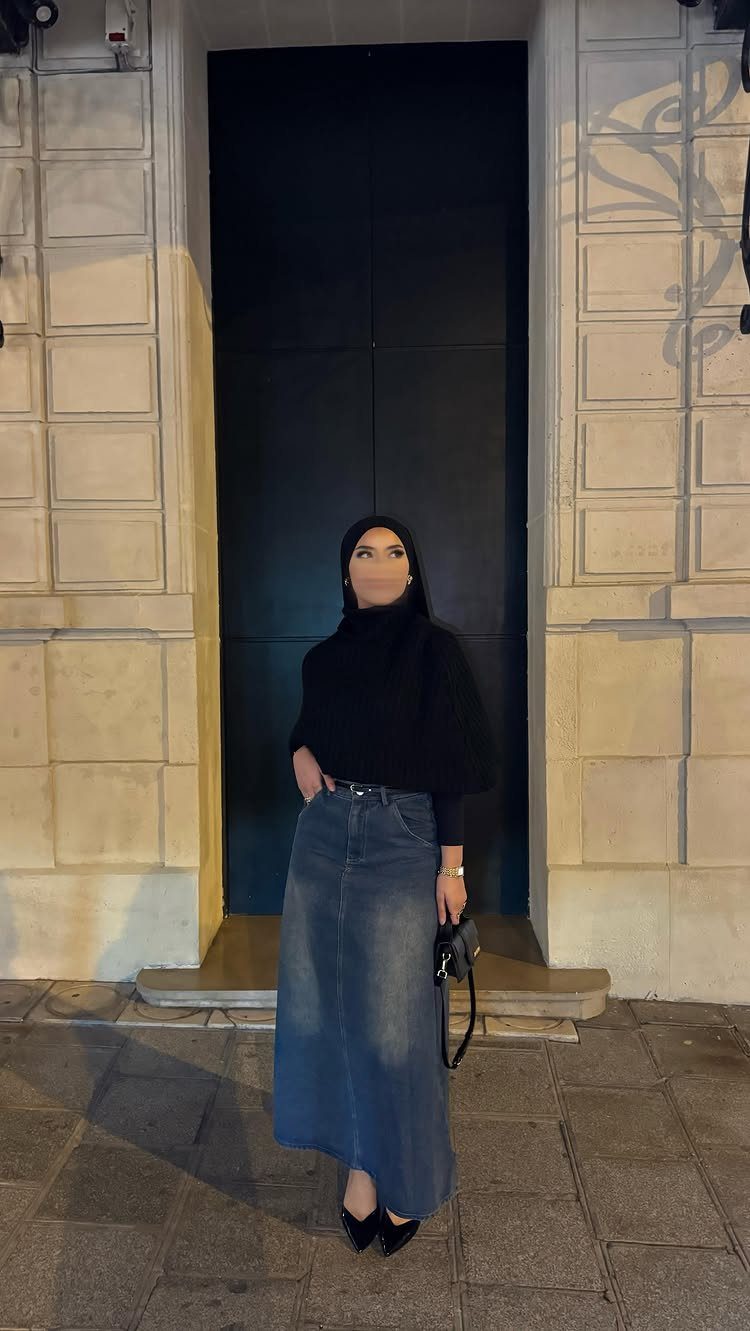
A fitted black long-sleeved top over a long blue denim skirt is about as simple as autumn dressing gets, and I like it because both pieces are easy to repeat in other outfits.
The fitted top keeps the straight denim from swallowing your frame.
Pick a skirt that reaches the ankle and a top that sits smoothly at the waist, tucked or just skimming it. Black against mid-blue denim gives enough contrast without needing a belt or jewelry.
Denim has little give, so check you can walk and sit comfortably before buying. For colder days, add a long coat.
9. Brown Shades
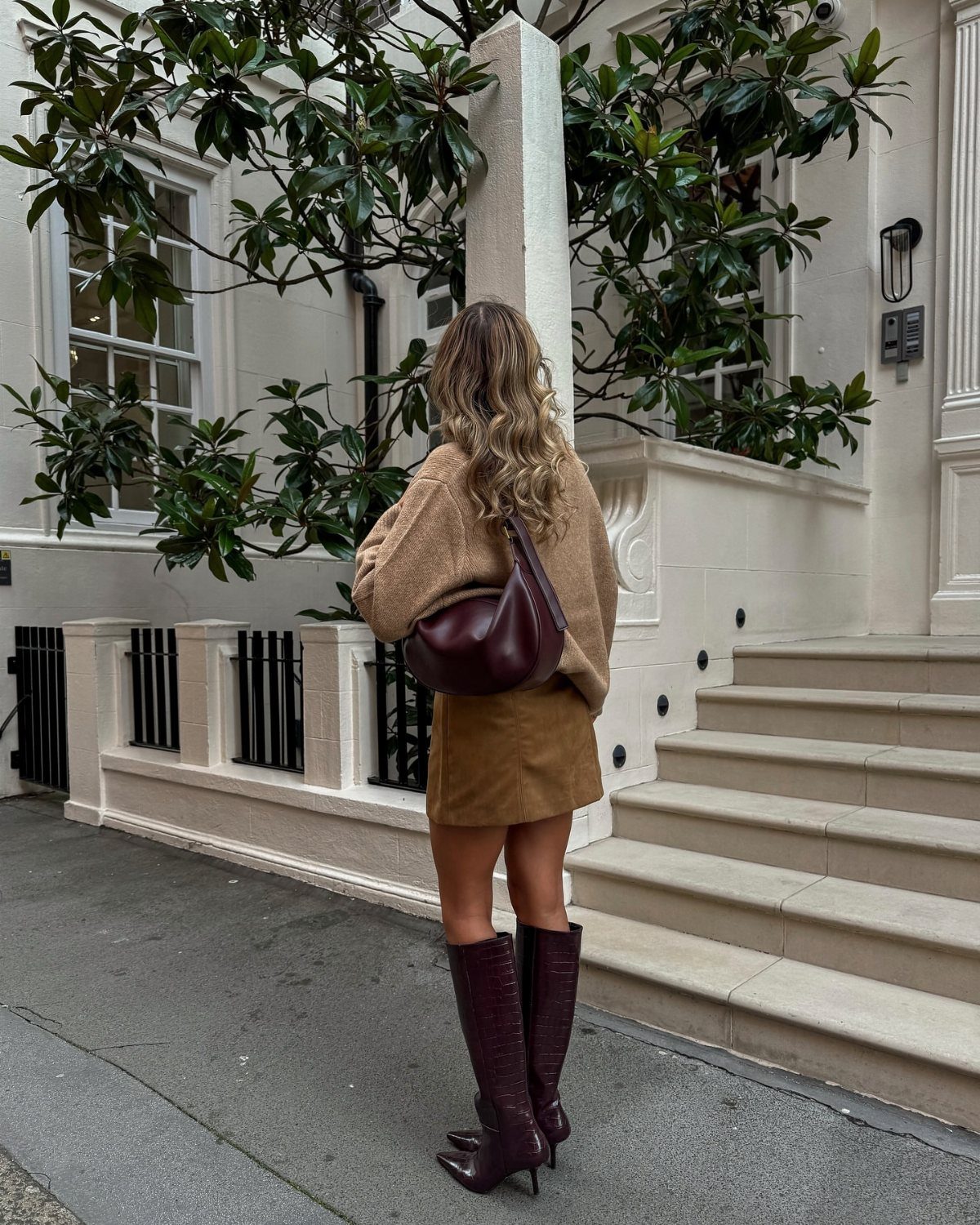
Brown works best when you stack several shades of it: a tan knit, a deeper brown skirt, and one contrasting piece to break it up.
Burgundy boots do that job well, since they sit close to brown on the color wheel but add warmth.
I’d keep the tones a step or two apart so the outfit reads as layered rather than mismatched. Choose one shade for the top and a darker one for the skirt.
A short skirt in cold weather asks for tights or a coat on top. Leather boots take the color further without adding another print.
Layering Techniques
Layering works best when each layer adds a different texture, not just another thickness.
A silk blouse with lace trim under a wool blazer is a good model: the smooth, delicate fabric sits against your skin and the structured wool does the outer work.
A bold red handbag on top of that gives the outfit a focal point, so the layers read as deliberate rather than piled on.
Scarves and solid boots finish the job. Pick one of them to carry some color or shine, and keep the other plain.
Layering is about style as much as warmth, so I’d choose pieces you’d happily show when the coat comes off.
Color Palette
A tight palette of red, black and white is easy to build and hard to get wrong. The pairings I’d rely on are red with black, black with white, and white with red accents.
Keep the red to one piece at a time, such as a bag, a scarf or a sweater, and let black or white carry the rest.
Leopard print is the one pattern worth adding, and it belongs in accessories like a belt, a bag or shoes. That way it reflects the season without overwhelming your silhouette.
If you wear a leopard accessory, hold everything else to a single color so the print stays the star.
Styling for Body Types
This season’s shapes include sculpted cuts, longer outerwear and rich knits, and they can be adapted to curvy, athletic, petite or in-between frames. Fit them to your proportions first and the trend second.
Strategic layering can lengthen the figure, so a long coat over a slim base works well when you want height. Where you want to celebrate curves, choose waist-defining cuts that follow your shape.
One piece gets to carry the volume, and everything else should stay close to the body. Try the outfit in a full-length mirror before you commit, and check the profile view too.
If there’s one trend that clearly aligns with the renewed 1980s energy running through the season, it’s this. Statement shoulders—whether exaggerated, padded or sharply tailored—have made their way back into every corner of the wardrobe.
Frequently Asked Questions
What are the trendy styles for autumn/winter?
Structured coats, tailored blazers and wide-leg trousers in rich neutrals are the safest bets, along with chunky ankle boots and slouchy knits.
Brown tailoring in place of black feels more expensive, and a long coat does the work of a whole outfit.
What is the 3 3 3 rule in fashion?
It’s a minimalist formula: pick 3 tops, 3 bottoms and 3 pairs of shoes that mix and match into a small, working wardrobe.
It suits the quality-over-quantity approach, because every piece has to pair with several others. A tight palette makes it easier, since pieces in close colors combine without effort.
Is it autumn winter or fall winter in fashion?
Both are used.
The American industry says fall/winter, often shortened to F/W or FW, while the UK says autumn/winter, shortened to AW. The clothes are the same: usually darker in color than summer collections and often higher priced.
How do you wear brown for autumn and winter?
Stack several shades of brown and add one contrasting piece to break it up, such as burgundy boots.
Shades of brown that sit one or two steps apart, like camel under chocolate, look layered on purpose, while tones that nearly match tend to look like a mistake.
A tan knit with a deeper brown skirt is a good starting pair.