The outfits below range from denim and waterproof overalls to a utility jacket with tall boots and a gingham skirt with a graphic tee, and the day’s work decides which one you grab: mud and animals call for waterproof overalls and tall boots, while a market stop leaves room for the skirt.
A pocket that holds a pencil upright, like the ones on the yellow canvas pants, earns its place faster than any color choice once you start squatting, reaching and hauling.
1. Farm Work Clothes
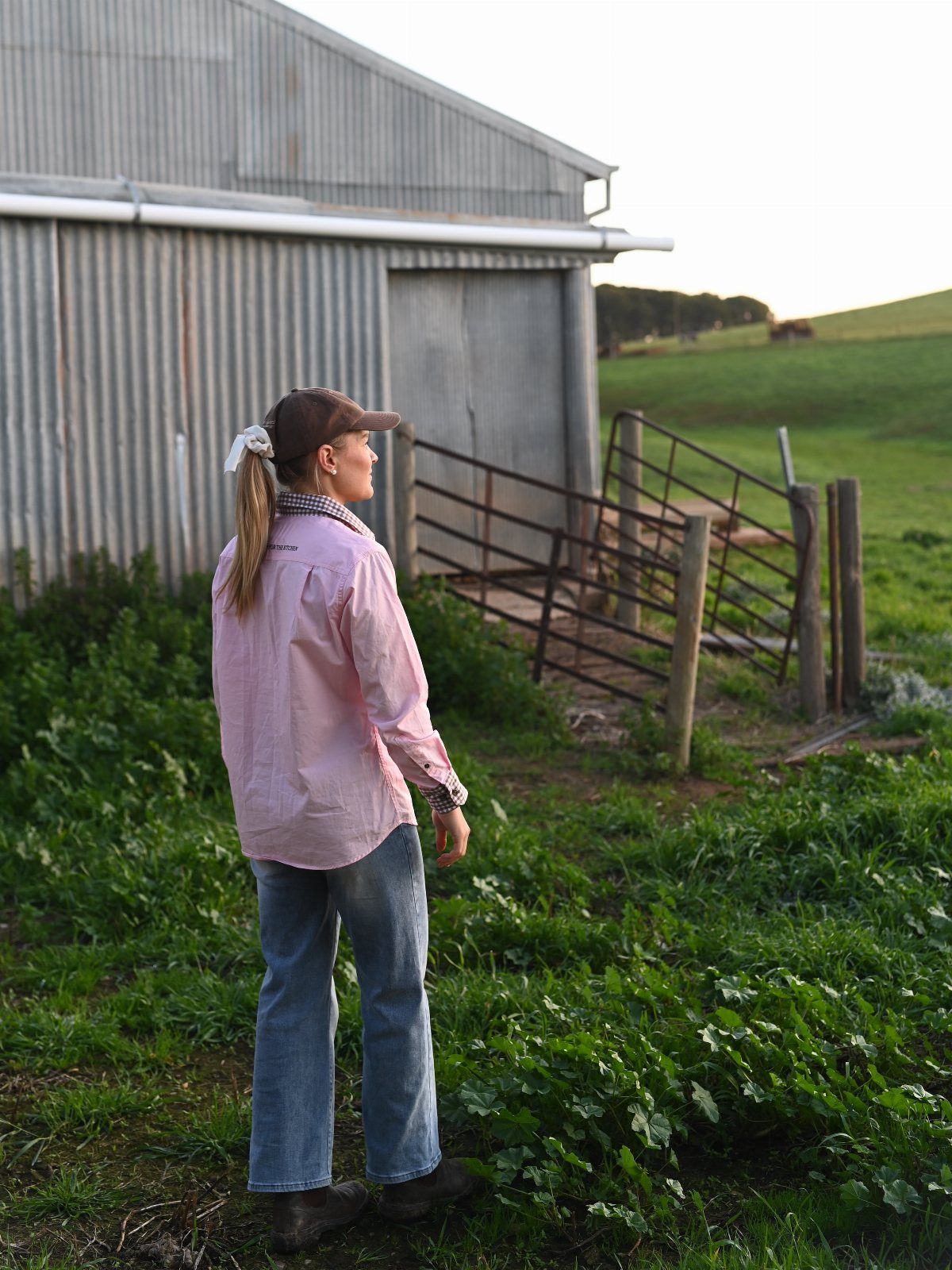
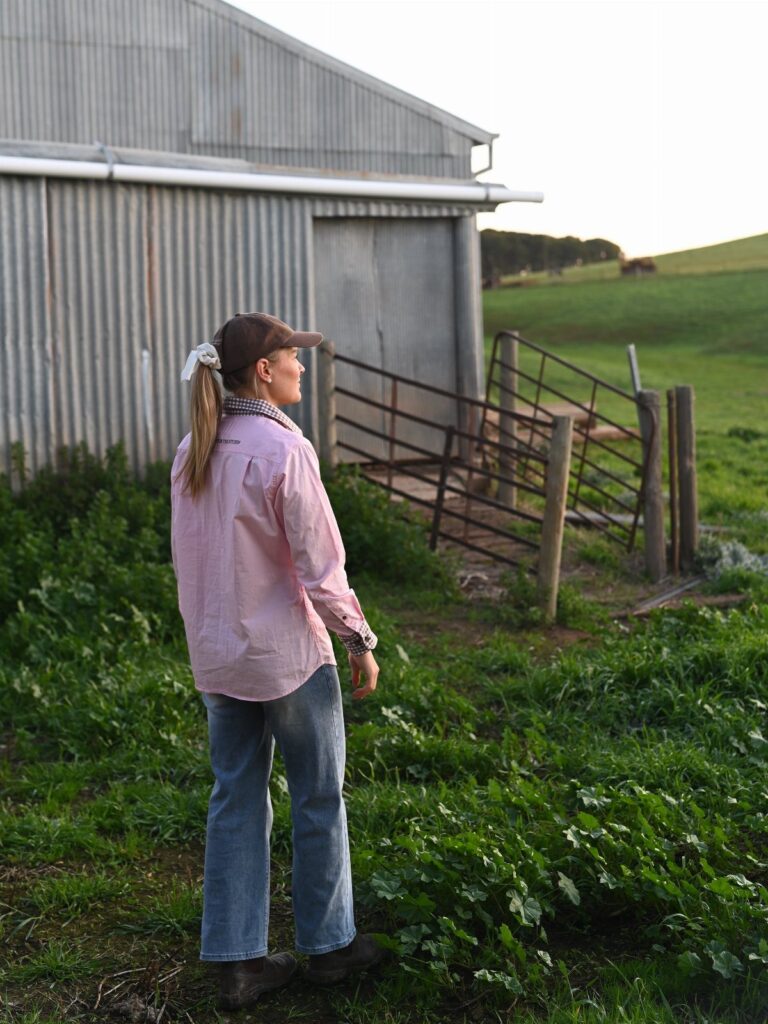
A button-down shirt, straight blue jeans and a cap make up the most dependable farm uniform I know. Each piece is easy to replace and easy to wash, so none of it needs babying.
Pink keeps the shirt from looking like a work uniform. Wear it tucked or untucked, and choose a cap that shades your eyes in open yard work.
Pick the jeans for comfort in a squat first and for color second.
2. Layering Clothes

Weather that swings between morning chill and afternoon warmth calls for pieces you can peel off, and this combination handles it well: a brown jacket over a red cardigan, with wide-leg jeans below.
I like that the cardigan buttons, so it opens fast when you warm up. The jacket goes on top and comes off first.
Keep the thinnest layer closest to your body. Wide-leg jeans leave room for a pair of leggings underneath on a cold day, though they can drag on wet ground.
3. Deep Pockets
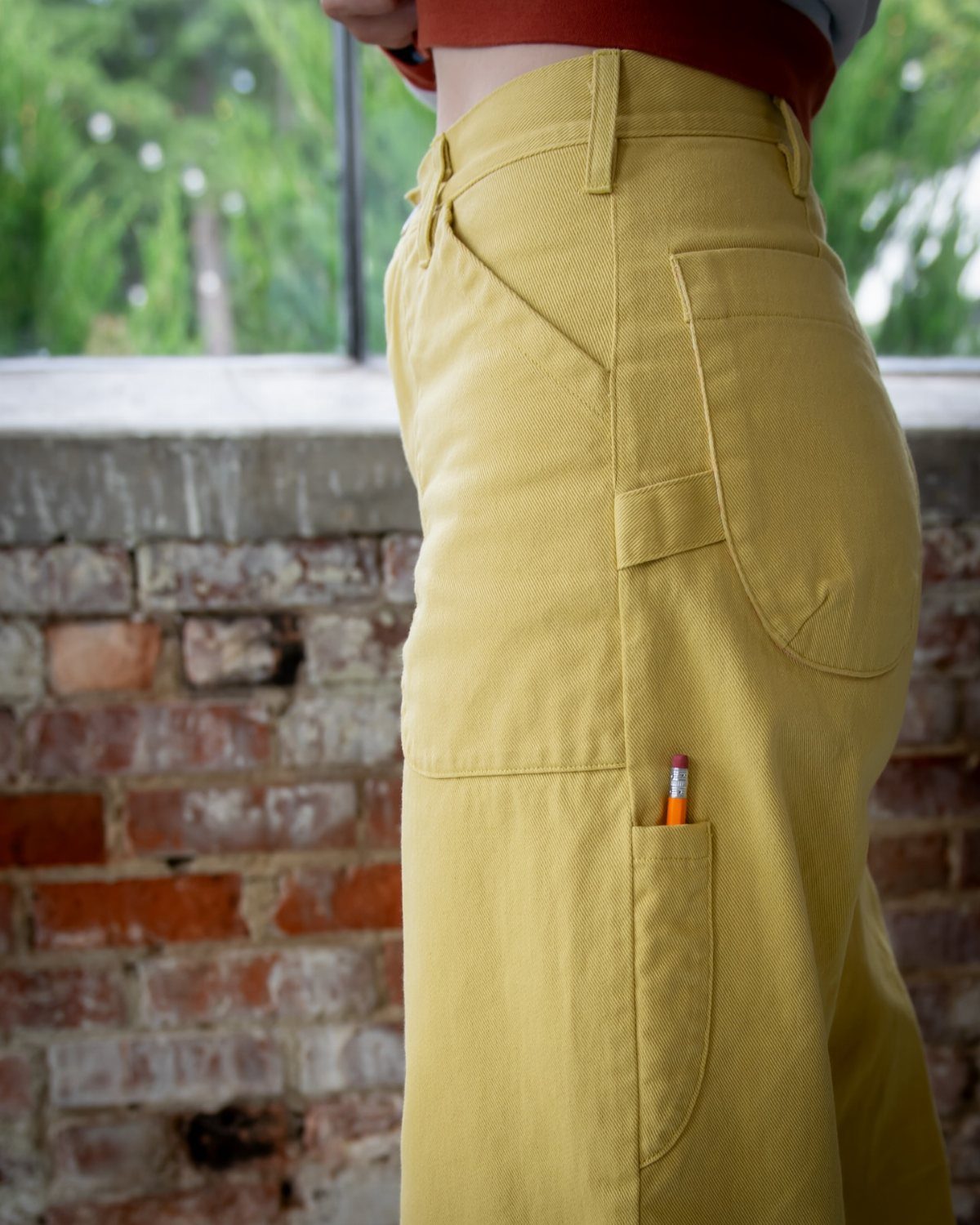
Pockets deep enough to hold a pencil upright, as these yellow canvas pants do, change how you work. Phone, pencil and small tools stay put instead of sliding out when you bend.
The high waist also keeps a shirt tucked while you reach and lift.
Before buying, push your whole hand into each pocket and sit down. If your phone shifts or pokes out, the pocket is too shallow for farm days.
4. Stylish Yet Practical Clothes
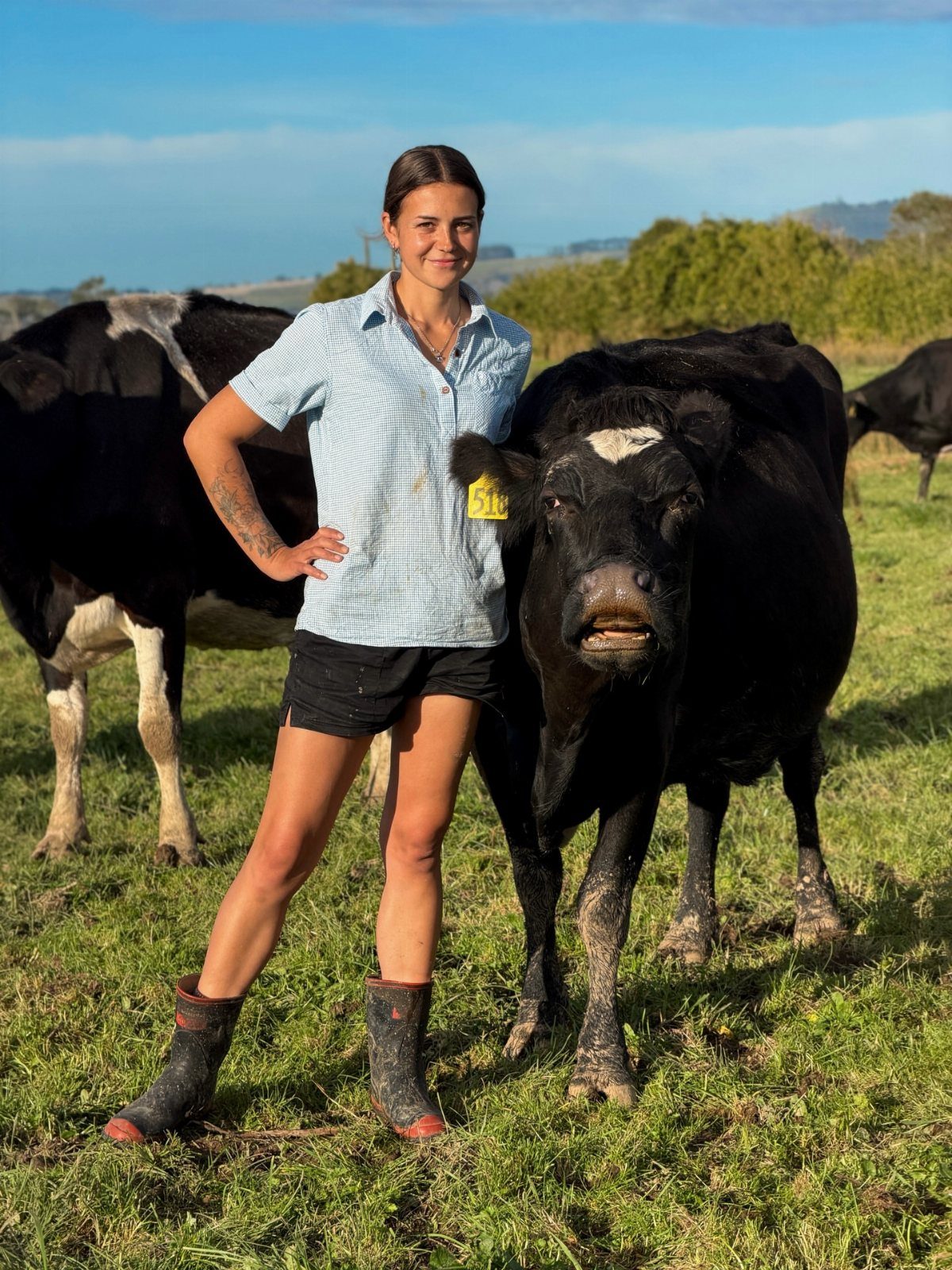
A field outfit can still look put together if you keep the formula simple: dark shorts, a light blue button-down and rubber boots.
The boots handle the mud, the crisp shirt keeps it polished, and the dark bottoms hide dirt. The boots do the practical work, so the rest can stay light and simple.
I’d choose this for warm days around animals, when you want something cooler than jeans but still need your feet and shins covered.
Shorts leave your legs exposed to brush, so keep them for tidy pastures.
5. Fleece Pullover and Boots
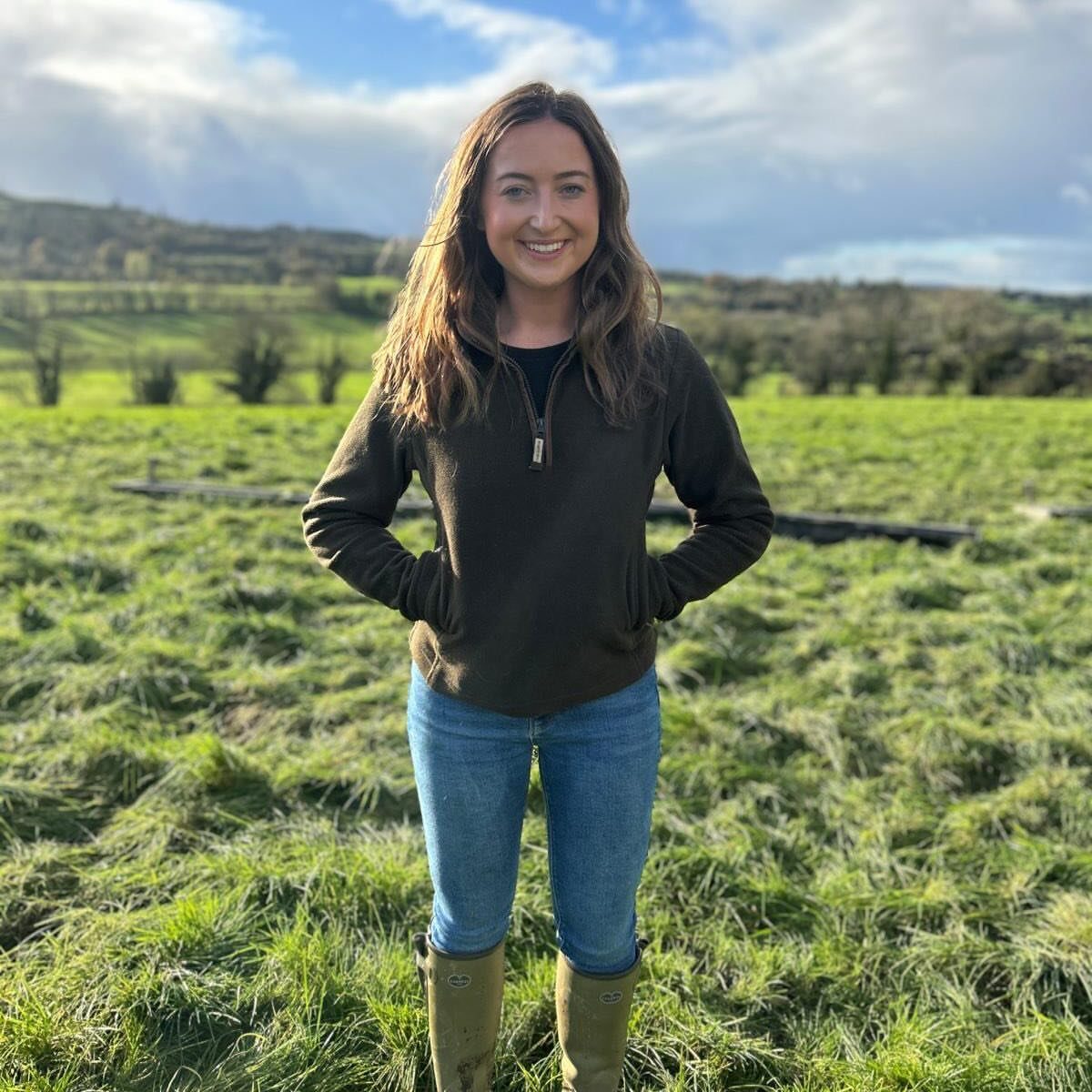
A dark green quarter-zip fleece with jeans and tall olive rubber boots is my pick for gray, damp mornings. The zip lets you vent at the neck without removing the whole pullover.
Matching the boots to the fleece in green tones keeps the outfit calm and cohesive.
Tuck the jeans into the boots or wear them over the tops, whichever keeps water out. Fleece is cozy but not a rain shell, so add one on wetter days.
6. Denim Overalls and Cardigan
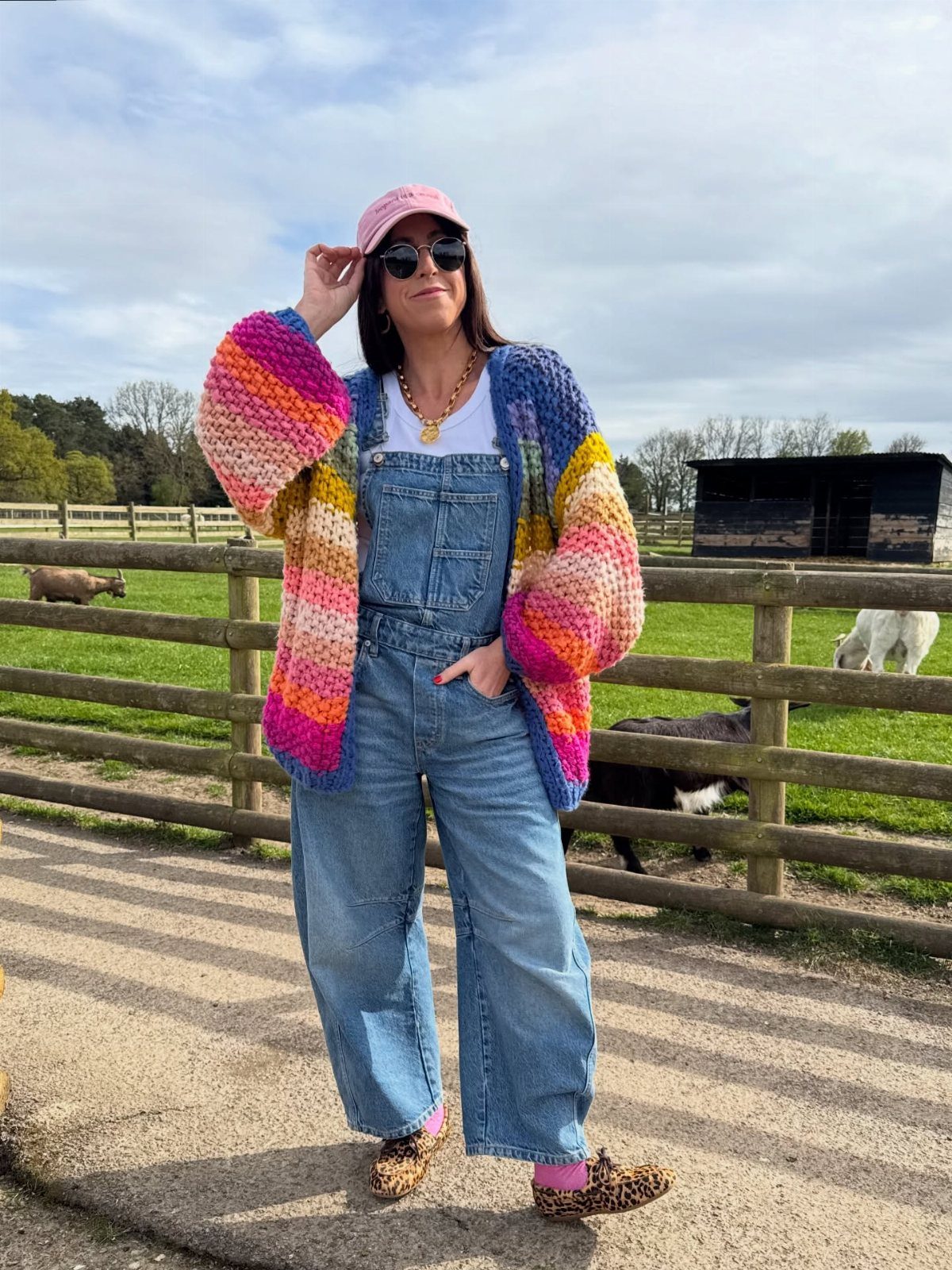
Denim bib overalls cover your midsection completely, which makes them a smart base for bending, kneeling and feeding. A colorful knit cardigan on top brings in warmth and personality without any fuss.
A baseball cap finishes the look and keeps sun off your face. I’d pick a cardigan in a pattern, since small smudges disappear into it.
Leopard print shoes are fun, but swap in sturdier ones for muddy paddocks.
7. Utility Jacket and Tall Boots
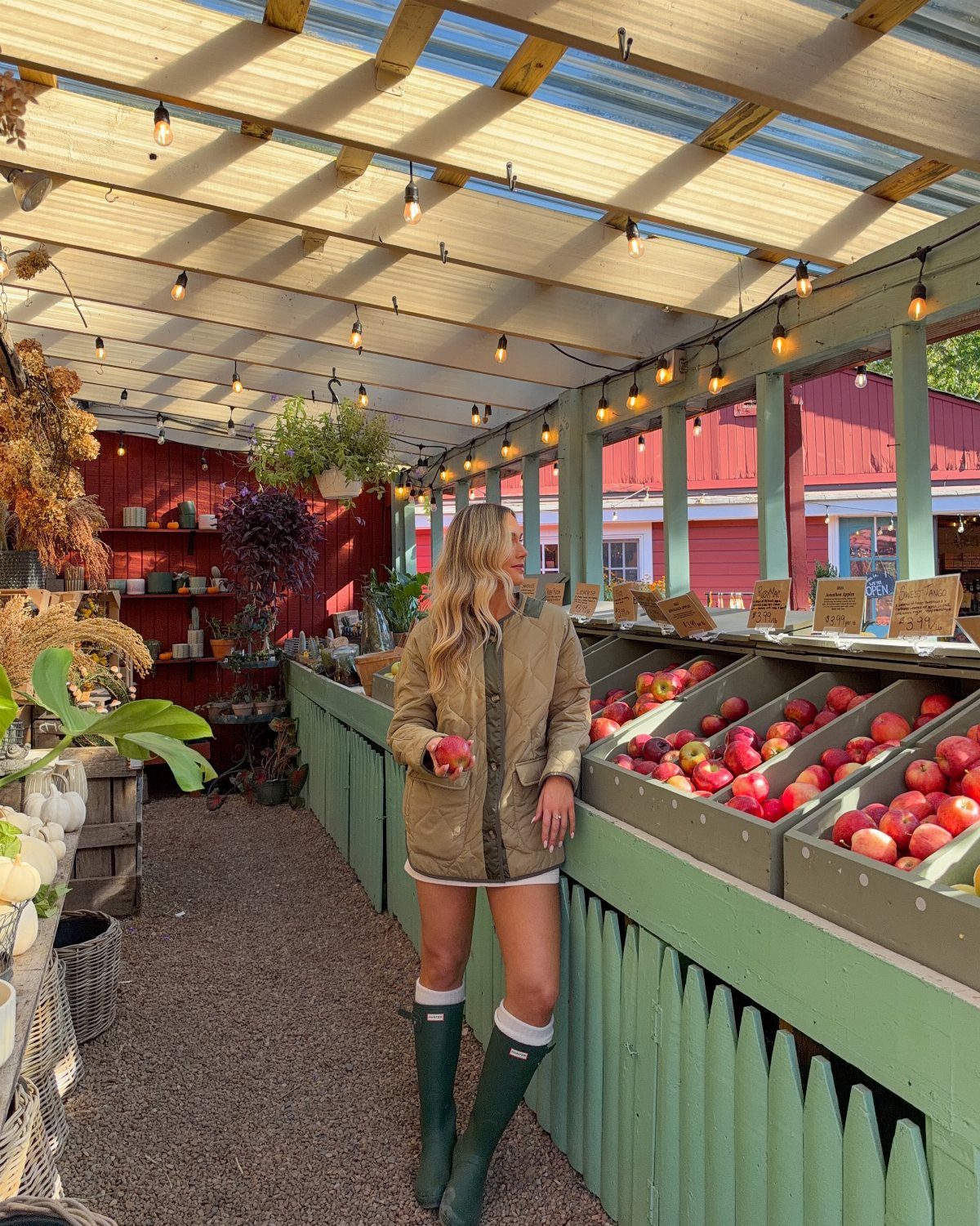
An olive utility jacket over a skirt and tall green rubber boots handles what farm days punish most: a layer that takes a snag, and legs that stay dry in mud.
Pockets on a jacket like this hold small things so your hands stay free.
I’d keep the skirt on the longer side, since tall boots cover the shins and leave less exposed in wet grass.
Skirts are best saved for market days and light chores.
8. Waterproof Overalls
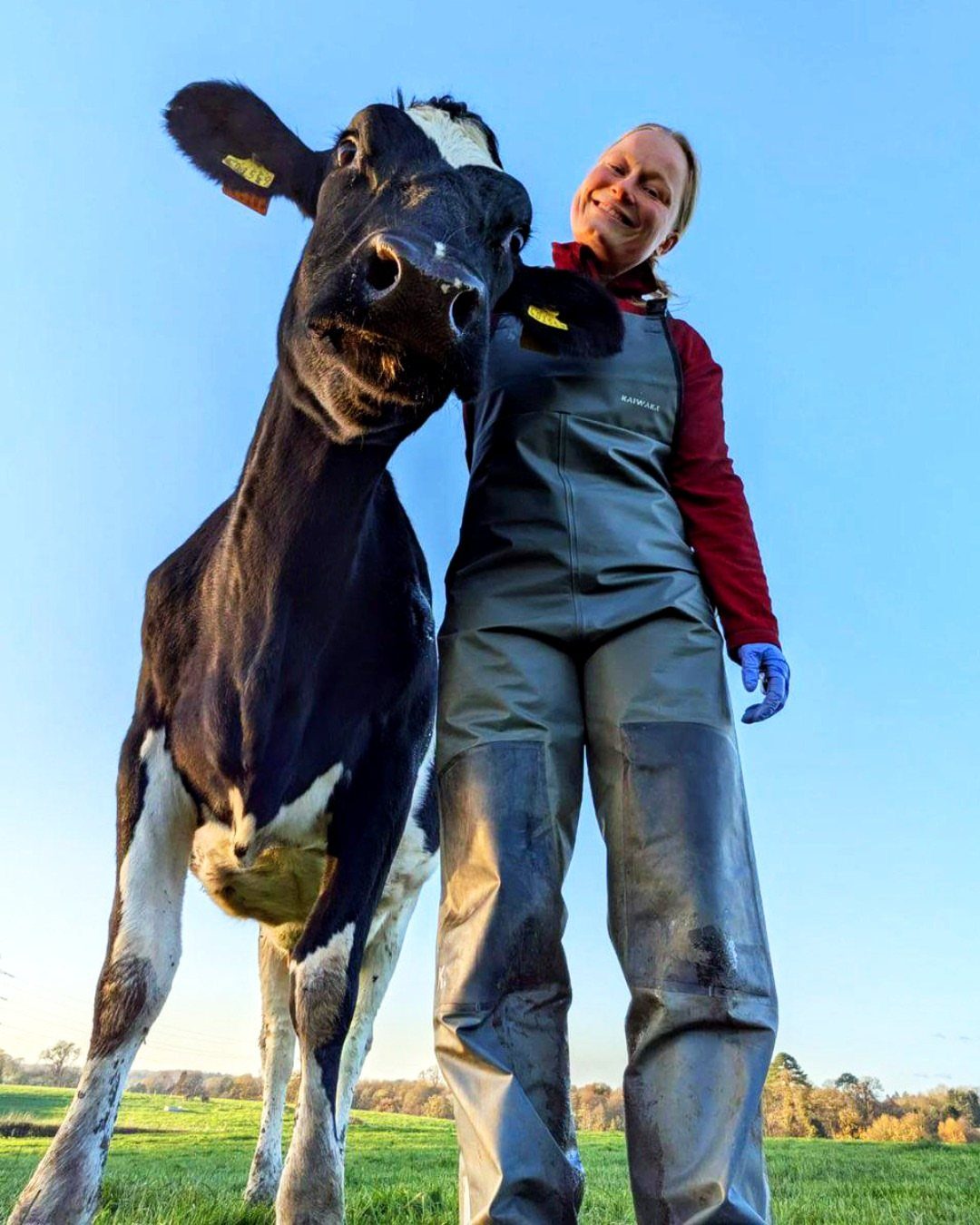
Heavy-duty waterproof bib overalls are what I’d wear for livestock work, because a hose, a wet pasture or a rainy morning won’t soak through to your clothes. The bib covers your chest, so a plain shirt underneath stays clean.
Pair them with farm boots and wear the overall legs over the boot tops, which sheds water away from your feet.
A bright shirt, red for example, keeps gray waterproof overalls from looking like gear. Waterproof layers can run warm, so choose a breathable tee underneath.
9. Gingham Skirt and Graphic Tee
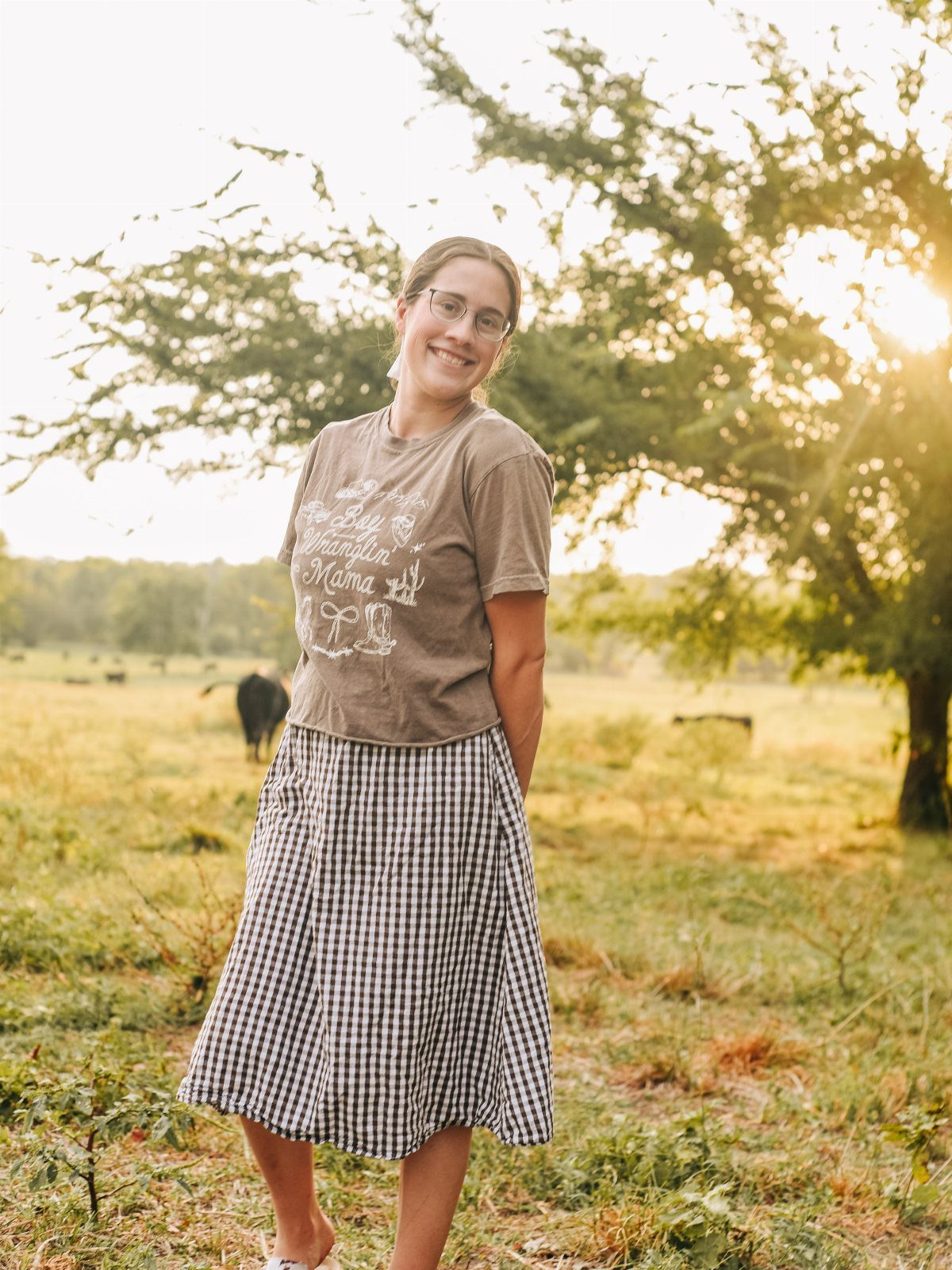
A gingham midi skirt with a plain graphic tee is the easiest way I know to dress for a pasture visit without looking costumed.
The tee keeps it casual, and the black and white check hides small bits of dust better than a solid.
Tuck the tee front only, or knot it, so the waist stays neat. A midi length covers your knees when you crouch or sit on the grass.
For mud or animal chores, swap the skirt for jeans and keep the tee.
Choosing the Right Fit
Fit on a farm is about movement, so test it before you commit.
Squat all the way down, reach overhead, and swing your arms forward as if you were hauling a bucket. Anything that pulls at the back or rides up is wrong for the job.
Start with waist and rise. A waistband that feels fine standing can dig in when you bend, and a rise that is too short will gap at the back.
Check the inseam too: it should clear your boot tops without bunching, or dragging on the ground.
Shoulders matter more than most people expect. The seam should sit at the edge of your shoulder, and your arms should lift without the whole shirt hiking up.
Sleeve length is the last check. Cuffs should reach your wrist bone when your arms are extended, so they don’t slide up while you work.
Maintenance Tips
Read the care label before the first wash, and follow it. Work clothes get washed often, and the wrong water temperature or dryer setting wears out fabric faster than the dirt does.
Close every fastener before the load goes in.
Zippers, snaps, buttons and hooks all catch on other fabric and tear it when they are left open, and a closed zipper is also far less likely to wear down its own teeth.
Once a month, look over the spots that take the most strain. Check the knees, the seat, the crotch seam, the pocket corners and the underarms.
Small holes and loose stitching are quick to fix with a needle and thread, and a repair done early keeps a good pair of pants going for another season.