The range runs from burgundy and black lace-up oxford heels you can wear with jeans to brown satin ankle-strap pumps that suit a dry evening best.
Where you’ll be walking decides the pair: a long day on your feet calls for a strap, as on the T-strap pumps, or a sturdy oxford heel, while a short night out can handle the satin ankle-strap pumps.
Most 1920s heels measured only 2–3 inches, which kept even the dressiest pair steady enough to walk in.
1. Two-Tone Spectator Shoes
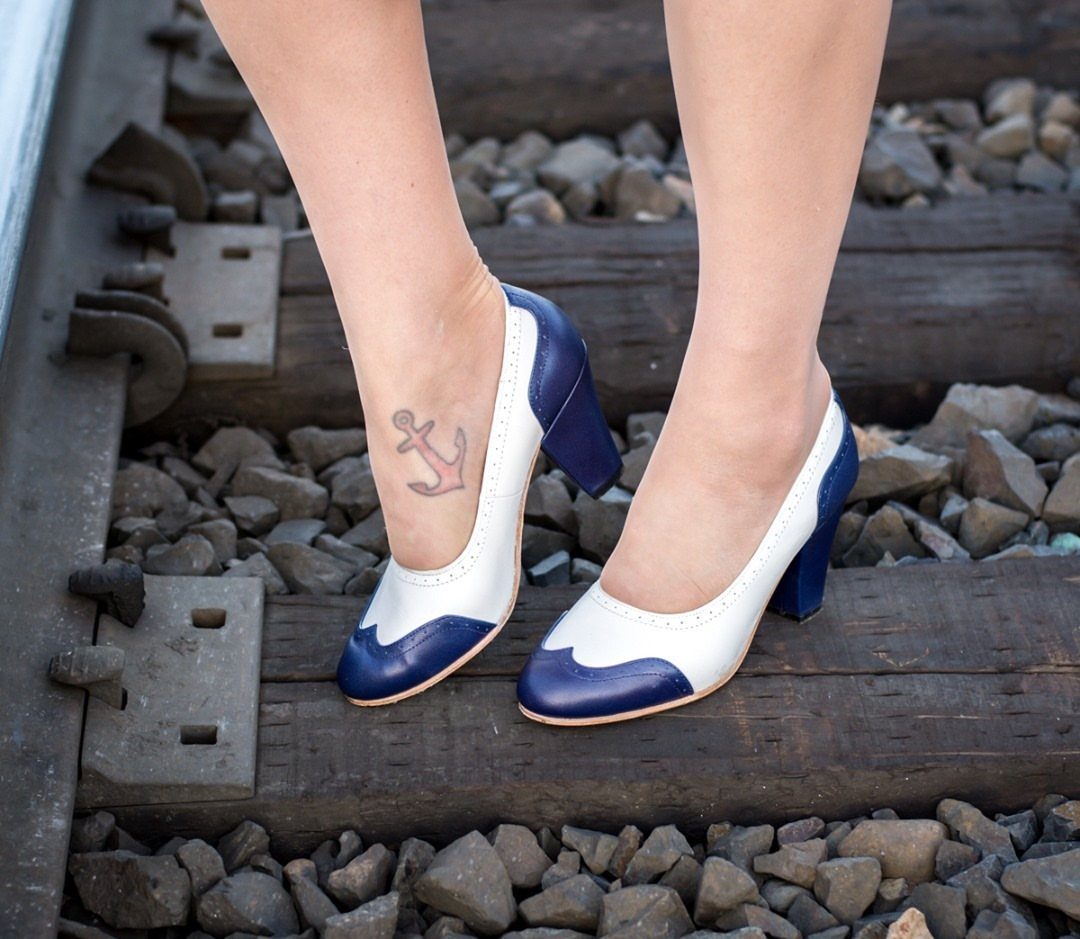
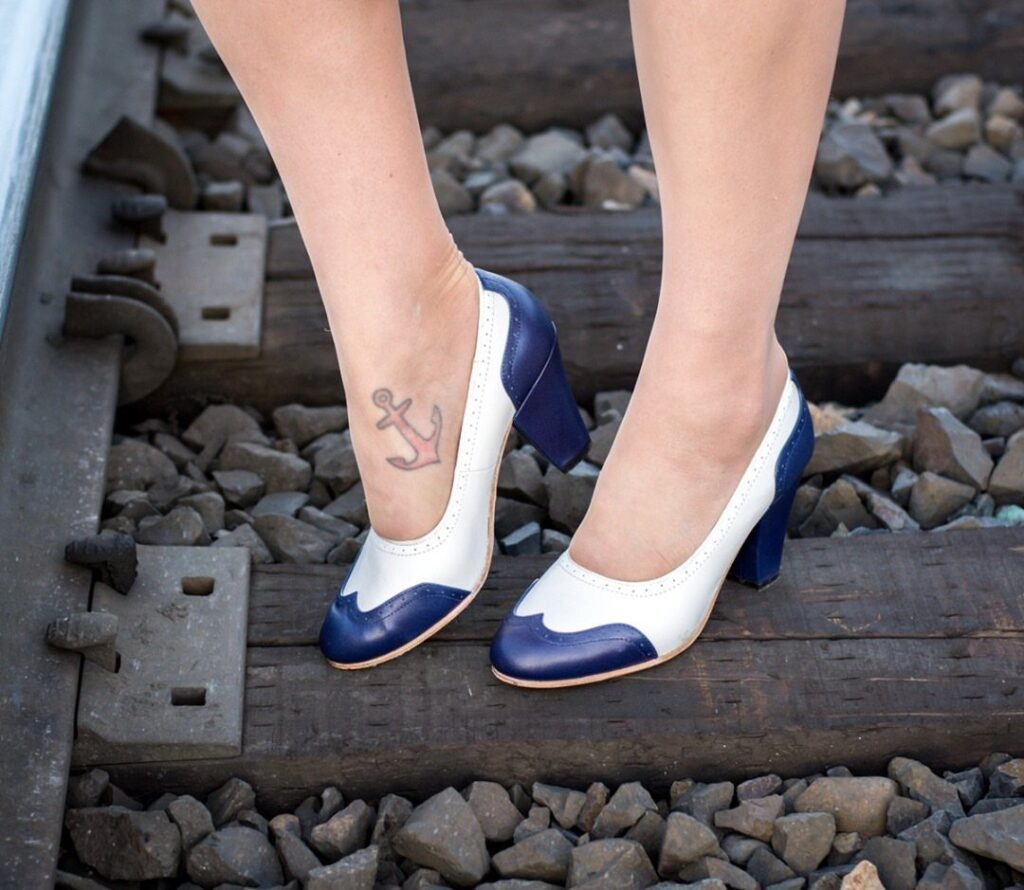
Spectators are the 1920s shoe that makes a plain outfit look planned. The navy-and-white split does the work: the contrast draws the eye to the foot, so everything else can stay quiet.
Two-tone shoes already carry the contrast, so I’d pair them with a plain dress or trousers in one solid color.
A white or navy dress, or cuffed light denim, lets the shoes carry the color story. I would skip a third shoe-matching color; a bag in one of the two tones is plenty.
Bare ankles or thin socks work best here, since a clean heel line shows off the shape of the shoe.
2. Burgundy Lace-Up Oxford Heels
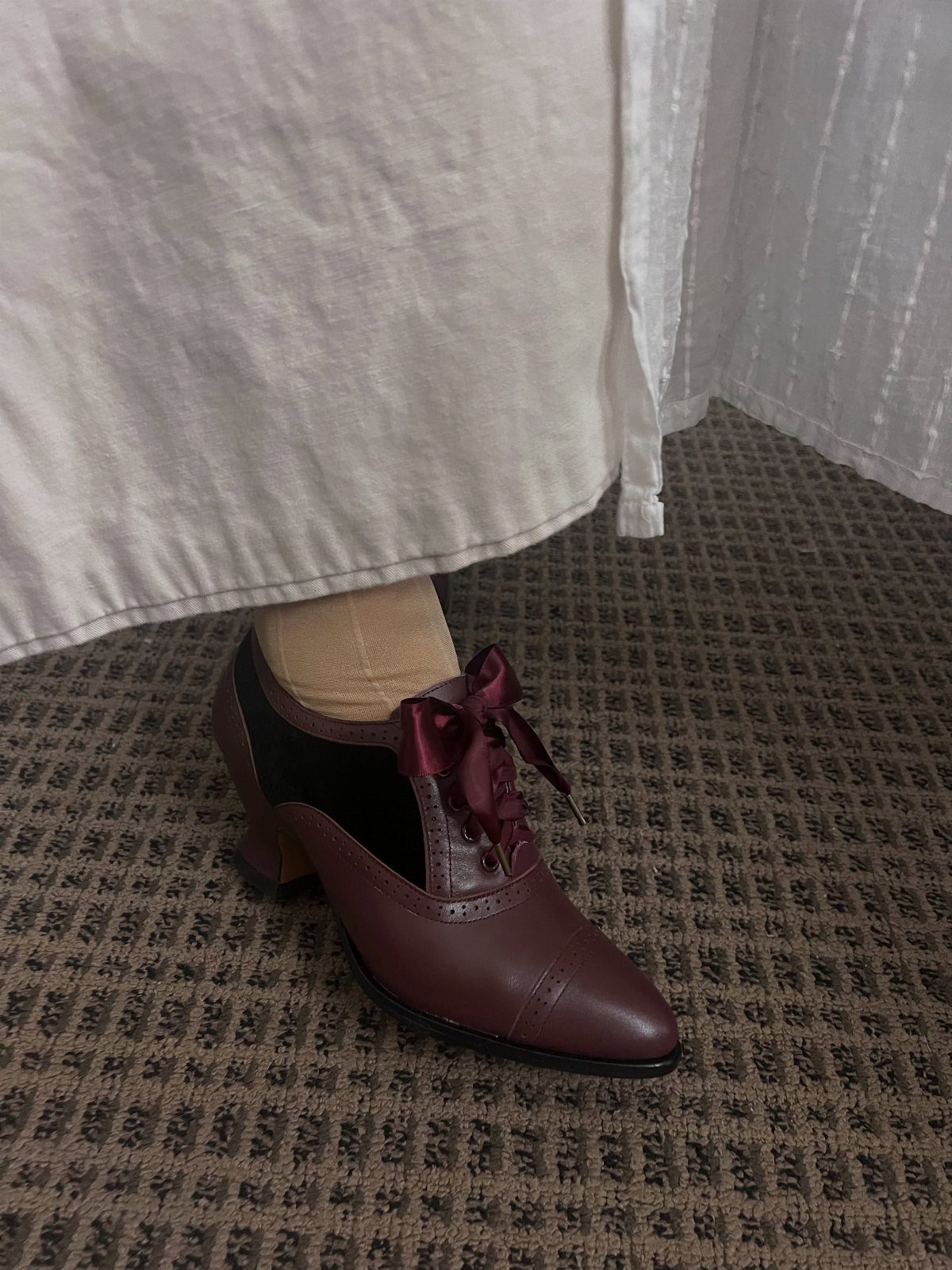
A burgundy leather oxford with a bow at the lace is the softest way to wear a menswear-style shoe. The deep red reads richer than black and still goes with navy, gray, and camel.
A tan stocking suits it better than bare skin, since the warm tone sits close to the leather. Tie the bow loose and slightly off-center so it looks relaxed rather than fussy.
Pair it with a midi skirt or a pleated trouser. Polish the leather occasionally, because burgundy shows scuffs.
3. Brown Satin Ankle-Strap Pumps
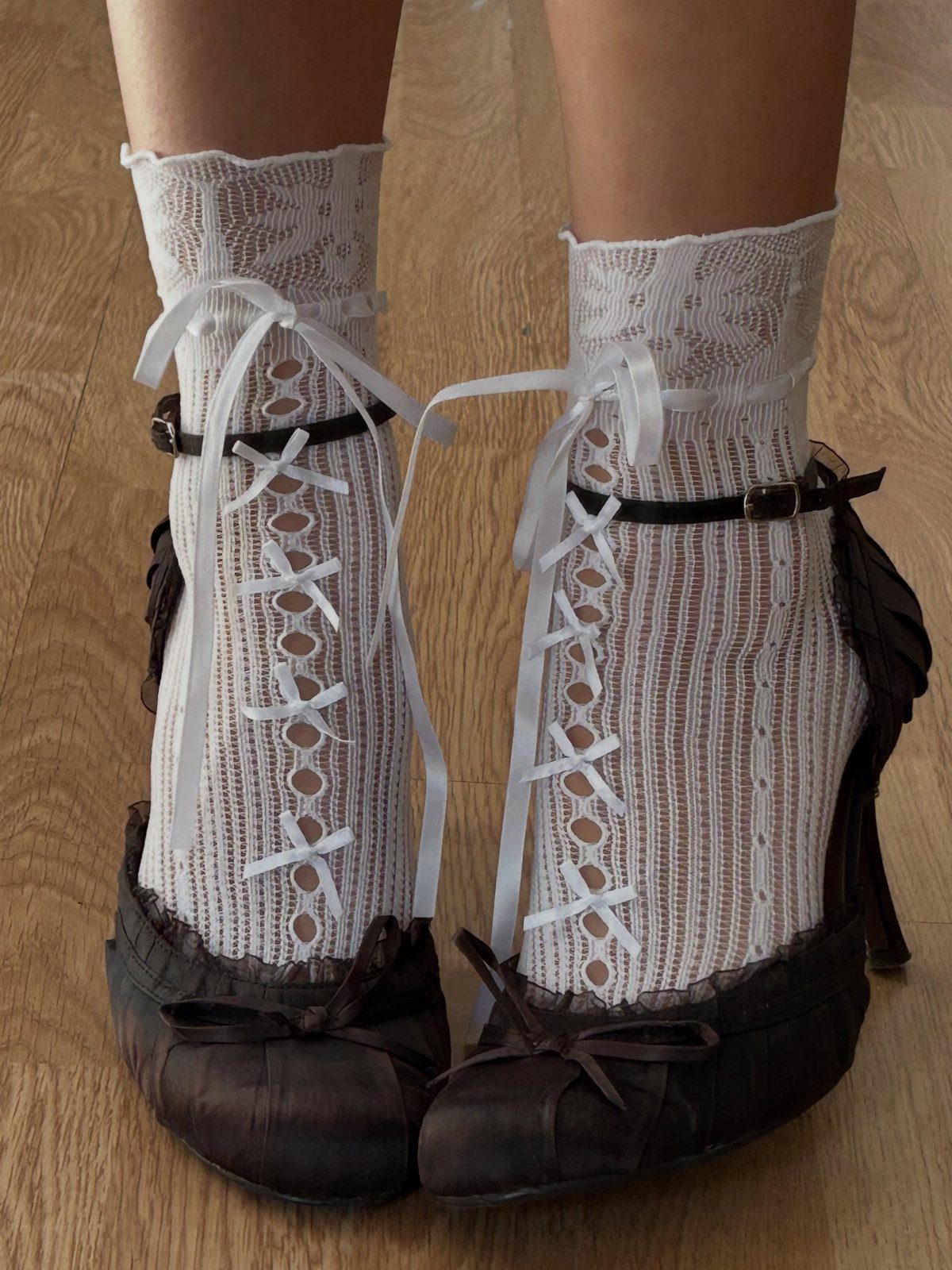
Dark brown satin with an ankle strap and a bow is dressier than black and a little less expected. The pointed toe lengthens the foot, and the strap keeps the shoe in place while you walk.
Lace socks on top are the detail I would copy: white against the brown looks sweet without turning costume. Keep the dress simple, such as a solid knee-length cut in cream or navy, so the bows are the only fuss.
Satin marks easily, so save these for dry evenings.
4. T-Strap Heeled Pumps
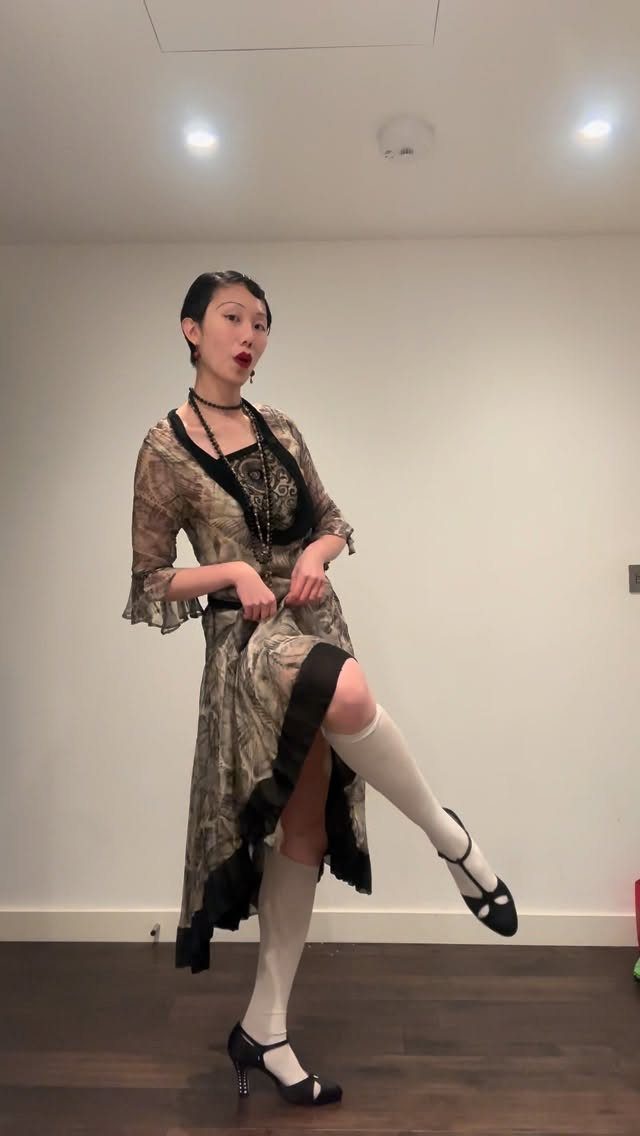
Black T-straps with white stockings give you the most recognizable shape of the decade. The strap runs up the center of the foot and meets another across the ankle, which anchors the shoe without any bulk.
White stockings make the strap look crisp and graphic. If that feels like too much, sheer nude hose keep the shape and calm the contrast.
A drop-waist dress is the obvious partner, but a plain slip skirt and fitted knit also work. Choose a heel you can walk in for hours.
5. Black Lace-Up Oxford Heels
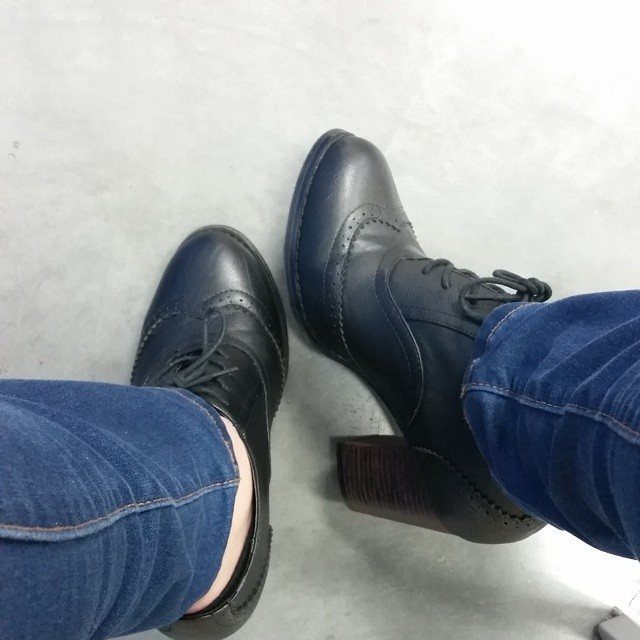
Black wingtip oxfords on a chunky brown heel are the easiest 1920s shoe to wear every day. With blue jeans, they replace sneakers and loafers without much effort.
The brown heel softens all that black leather, and the stacked shape gives you height you can actually stand in. Cuff the jeans once so the lacing and the perforated toe cap show.
I would pick a straight or slim leg here; wide hems swallow the shoe. Add a plain tee and a blazer, and the look is finished.
6. Authentic 1920s Street Heels
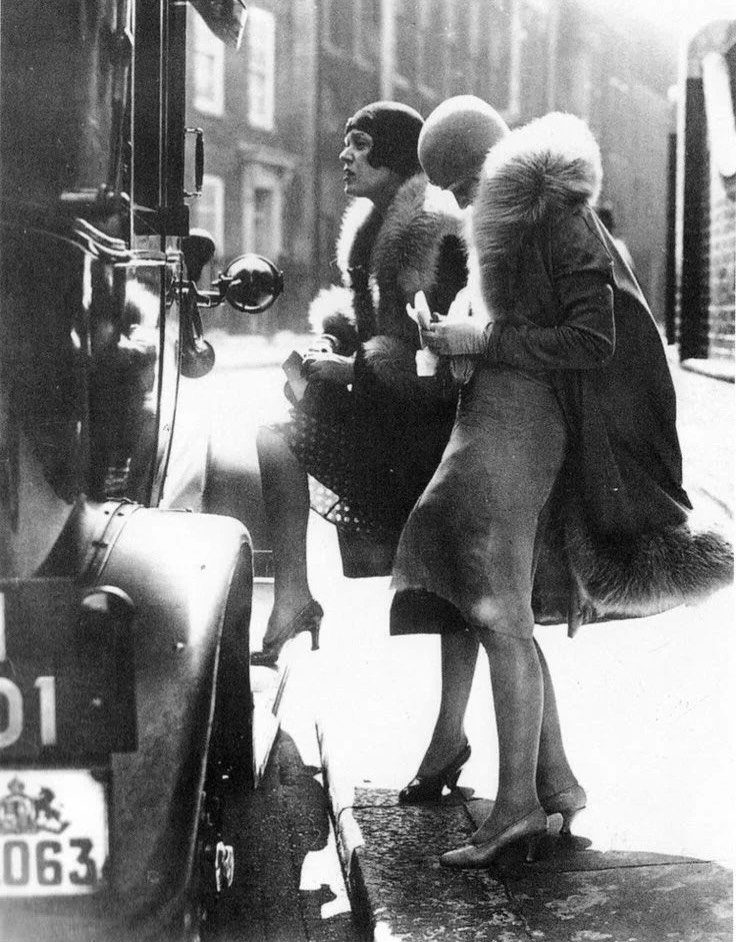
Street heels from the period were made for walking in a coat and hat, and that is the useful lesson. Two women in cloche hats, fur-trimmed coats, and plain pumps look finished because the shoe never competes with the outerwear.
For a modern take, I’d pick a simple closed pump in dark leather; the coat should be the piece people notice. A mid-length coat with a fur-style collar and a snug hat does most of the work.
Keep hosiery sheer and neutral. Stay away from sparkle, since daytime shoes in this look stay quiet.
Flapper Influence on Footwear
Heel height is what made flapper shoes wearable on a dance floor. Heels of the 1920s sat at a modest 2–3 inches, and I’d keep to that height when shopping if you want the same easy, walkable feel.
Mary Janes and T-straps were the styles that paired a low heel with real stability.
A shoe that stays on your foot lets you move with confidence, so choose a heel you can dance in over one that only looks right standing still.
Decoration did the dressing up. Beads, glass gems, cutouts, embroidery and buckles all appeared on the vamp, so a plain low heel with one decorative detail gets you closest.
Comfort and Practicality
Support is the practical reason to choose a strapped shoe.
A strap across the foot or ankle keeps the shoe from slipping off when you move fast, which is why T-straps worked for both a workday and a night at a jazz club.
When I test a strapped pair, I walk quickly and turn in place before deciding. If the heel lifts or the strap digs in, the shoe fails the same test it was designed to pass.
Decoration is optional. Period pairs carried a side strap closed with one or two buttons, and a buckle or button closure lets you adjust the fit through a long day.
Frequently Asked Questions
What were the fashion trends for women in the 1920s?
For shoes, the trends were low, walkable heels of 2–3 inches, strapped styles like T-straps and Mary Janes, and plenty of decoration on the vamp.
Decoration came from beads, glass stones, cutouts, embroidery and ornamental buckles, which is where a plain pump became an evening shoe. Hemlines rose and dancing became a priority, so a shoe that stayed on the foot mattered more than height.
What heels were popular in the 1920s?
T-strap heels, Mary Janes and French heels led the decade.
The French heel usually ran around 2–3 inches, and its gentle curve looked right under a hemline that had crept up to the knee. T-straps usually closed with a side strap fastened by one or two buttons.
Did flappers wear high heels?
Mostly no: flappers favored low heels, about 2–3 inches, because they were practical for energetic dances like the Charleston.
Higher heels still appeared at more formal occasions. Dancing the Charleston in a loose pump meant losing it mid-step, so a strap over the instep or ankle did the holding, and that is why T-straps and Mary Janes dominated.